
Best overall for persistent distress: a licensed mental health professional. Best for workplace causes: the NIOSH Impact Wellbeing Guide. Best for a low-pressure first conversation: a trusted peer-support resource. The best burnout recovery resources for healthcare workers in 2026 address the problem you actually face, rather than adding another task to an already exhausting day.
- The best burnout recovery resources for healthcare workers match personal distress, workplace pressures, and caregiving demands.
- Licensed mental health professionals are the first choice when distress affects daily functioning or safety.
- The NIOSH Impact Wellbeing Guide belongs with leaders addressing workplace conditions, not just individual coping.
- Pdfcanopy offers self-guided reading for healthcare workers also facing parenting burnout; PDFs do not replace clinical care.
Why this matters
You can care deeply about patients and still dread your next shift. That does not make you uncaring. It means your next step needs to address what is draining you, whether that is workload, distress, isolation, or responsibilities at home.
The World Health Organization's ICD-11 describes burnout as an occupational phenomenon associated with chronic workplace stress that has not been successfully managed. Its scope matters: burnout is not a catchall diagnosis for every kind of exhaustion, and a reading list cannot determine whether depression, anxiety, sleep problems, or another health issue needs attention.
Pdfcanopy sells downloadable advice guides for personal and caregiving challenges. Those resources belong alongside appropriate support—not in place of care or changes to unsafe working conditions.
For this 2026 guide, the recommendations separate clinical support, workplace action, and self-guided help. Choose the resource that addresses your biggest unresolved need, not the one that asks you to become better at tolerating it.
What makes the best burnout recovery resources
A useful resource should make your next decision easier. Use these criteria before choosing:
- Problem fit: Does it address workplace conditions, emotional distress, isolation, or pressures outside work?
- Clear scope: Does it distinguish education and peer support from assessment and treatment?
- Practical access: Can you use it around your actual shifts, without sacrificing needed rest?
- Privacy clarity: Can you understand confidentiality and its limits before sharing sensitive information?
- Actionable next steps: Does it help you identify a conversation, request, appointment, or manageable change?
- Honest limitations: Does it acknowledge what personal coping cannot fix?
Do not rank resources by how much content they contain. A large workbook that becomes another obligation is a poor fit when you need a straightforward conversation or a change in workload.
Burnout recovery resources at a glance
| Resource | Best for | Standout feature | Key limitation |
|---|---|---|---|
| Licensed mental health professional | Persistent distress affecting daily life | Individual assessment and an appropriate care plan | Cannot independently change staffing or management decisions |
| NIOSH Impact Wellbeing Guide | Leaders addressing workplace causes | An organizational approach to healthcare worker wellbeing | Requires leadership action; not personal treatment |
| Employee assistance program | Finding an initial support route through work | A place to ask about counseling and referrals | Services and confidentiality arrangements need checking |
| Healthcare peer support | Feeling isolated after difficult work experiences | Conversation with someone who understands healthcare work | Not a substitute for clinical assessment |
| You're Not Failing You're Burned Out: The Neuro-Affirming Parent’s Survival and Thriving Guide. | Healthcare workers parenting neurodivergent children | Self-guided material focused on parenting burnout | Not a healthcare workplace burnout treatment |
| Occupational health consultation | Understanding work-related health concerns | A route to discuss health and work together | Employer processes and available support differ |
The order reflects distinct uses, not evidence that one resource produces better outcomes than every other option. Several can belong in the same recovery plan.
1. Licensed mental health professional: best for persistent distress
A licensed mental health professional can assess what is happening rather than assuming every symptom is burnout. Choose this route when distress affects your relationships, daily functioning, sleep, or ability to work safely.
You do not need to arrive with the right label. Describe what has changed, what happens before and after shifts, and what you are struggling to manage. Ask about experience supporting healthcare workers and whether appointment arrangements fit your schedule.
Licensed mental health professional pros:
- Provides individual assessment rather than general advice.
- Helps distinguish occupational stress from other concerns requiring care.
- Offers a setting to discuss experiences you do not want to share at work.
Licensed mental health professional cons:
- Finding a suitable clinician takes coordination.
- Personal treatment does not resolve staffing shortages or workplace policies.
Before booking, ask about confidentiality, its limits, and any concerns you have about professional obligations. Do not assume that an employer-connected service and an independent practice have identical arrangements.
Best for: Healthcare workers whose distress persists or interferes with daily life.
Verdict: Choose professional support when your functioning or safety is affected; do not rely on self-help alone.
2. NIOSH Impact Wellbeing Guide: best for workplace causes
The National Institute for Occupational Safety and Health's Impact Wellbeing Guide is an organizational resource for hospital leaders. Its focus makes it different from a personal coping workbook: it directs attention toward systems that affect healthcare worker wellbeing.
For your 2026 recovery plan, this is the resource to bring into a leadership conversation when the problem involves working conditions. A bedside worker cannot implement an organization-wide approach alone, but can ask whether leadership has a concrete plan to address the pressures staff identify.
NIOSH Impact Wellbeing Guide pros:
- Keeps organizational responsibility visible.
- Gives leaders a healthcare-specific starting point.
- Supports discussion beyond individual resilience and self-care.
NIOSH Impact Wellbeing Guide cons:
- Requires decision-makers to participate and act.
- Does not provide individual mental health assessment or treatment.
Make your request specific. Describe the work condition, its effect on your duties, and the change you want considered. Keep patient-identifying information out of personal notes and use the appropriate workplace reporting process for safety concerns.
Best for: Healthcare leaders, managers, and staff representatives addressing organizational pressures.
Verdict: Use for workplace action; skip it as your sole source of personal recovery support.
3. Employee assistance program: best for finding an initial route
An employee assistance program, or EAP, is a place to ask what employer-connected support exists. Start with questions rather than assumptions: whether counseling is offered, how referrals work, and what information is shared with your employer.
The useful outcome is a clear next step. If the service cannot meet your needs, ask where it directs employees for continuing care instead of repeatedly explaining your situation without a plan.
Employee assistance program pros:
- Provides a defined workplace route for asking about support.
- Can help you understand the services included in your employer's arrangement.
- Creates an opportunity to request referrals when offered support is insufficient.
Employee assistance program cons:
- Programs differ in scope and arrangements.
- An initial conversation does not guarantee suitable ongoing care.
For your first call, write down 3 questions: What support is offered? What are the confidentiality limits? What happens if I need continuing care? This is a suggested preparation list, not a measure of program quality.
You can ask these questions before describing sensitive details. Understanding the process is part of deciding whether the resource fits you.
Best for: Healthcare workers who want a clear starting point through their employer.
Verdict: Choose as an entry route after checking scope and privacy; hold off on treating it as a complete recovery plan.
4. Healthcare peer support: best for work-related isolation
Peer support gives you a place to speak with someone familiar with healthcare work. The aim is connection and understanding, not diagnosis or a promise that talking will resolve the conditions behind your exhaustion.
Look for a structured program or a trusted colleague who respects boundaries. Before sharing, ask how the conversation is handled, whether anything is documented, and what happens if a safety concern arises.
Healthcare peer support pros:
- Allows discussion with someone who understands the work context.
- Gives you space to name an experience without turning it into a performance review.
- Can complement professional care and organizational action.
Healthcare peer support cons:
- A peer's experience is not an individual clinical assessment.
- Confidentiality and boundaries need clarification, particularly inside your workplace.
Keep the first conversation manageable. Ask for 10 minutes to talk after a difficult shift, with no expectation that the other person will fix the situation. That is a suggested starting point, not a recovery timeline.
Protect patient confidentiality throughout. Talk about your reactions and needs without sharing identifying details through informal channels.
Best for: Healthcare workers who feel alone with difficult work experiences.
Verdict: Choose for connection; skip peer support as a replacement for care when symptoms affect functioning or safety.
5. Pdfcanopy's parenting guide: best for overlapping caregiving demands
You're Not Failing You're Burned Out: The Neuro-Affirming Parent’s Survival and Thriving Guide. is described as a practical toolkit for parents of autistic, ADHD, or otherwise neurodivergent children. Its stated focus is the burnout risk associated with those parenting responsibilities.
That makes it a specific recommendation—not a general healthcare burnout manual. If you leave a demanding clinical role and return to substantial caregiving responsibilities, a parenting-focused guide addresses a different part of your situation than workplace resources do.
Pdfcanopy parenting guide pros:
- Focuses on parents of neurodivergent children.
- Offers downloadable, self-guided reading.
- Uses a compassionate, practical framing for parenting burnout.
Pdfcanopy parenting guide cons:
- Does not specifically address healthcare workplace conditions.
- A PDF cannot assess symptoms or provide individualized treatment.
Pdfcanopy burnout reading is best for healthcare workers who also parent neurodivergent children and want self-guided support alongside appropriate care. Read for relevance, not completion. You do not need to turn the guide into another assignment.
For 2026, keep the distinction clear: parenting support can address home pressures, but it does not replace a staffing conversation, an occupational health assessment, or mental health care.
Best for: Healthcare workers parenting neurodivergent children who want practical reading about parenting burnout.
Verdict: Choose for that specific overlap; skip it if your primary need is clinical assessment or workplace change.
6. Occupational health consultation: best for health-and-work questions
Occupational health is a route for discussing how your health and your work interact. Ask what assessment or guidance the service offers and how recommendations are communicated within your organization.
This is especially relevant when you need clarity about health concerns affecting your duties. Do not assume the consultation automatically produces a particular adjustment, leave arrangement, or change in scheduling.
Occupational health consultation pros:
- Places health concerns in the context of your actual duties.
- Provides a route to ask about work-related support processes.
- Helps separate personal coping questions from employment-related health questions.
Occupational health consultation cons:
- The service's remit depends on your organization.
- Workplace decisions can involve separate management or administrative processes.
Prepare a short account of what has changed and which duties are difficult. Ask who receives the findings and whether you can review the relevant information. Use your employer's established process rather than relying on informal assurances.
Best for: Healthcare workers needing guidance about health concerns and work responsibilities.
Verdict: Choose for health-and-work questions; hold off on expecting a guaranteed workplace outcome.
How these resources were ranked
The 2026 ranking prioritizes problem fit, clear scope, practical access, privacy questions, and a usable next step. Professional assessment comes first for persistent distress; organizational resources take priority when the problem requires workplace authority.
The source scopes are deliberately separate: WHO ICD-11 defines the occupational phenomenon, NIOSH provides an organizational guide, and the product description defines the parenting guide's intended audience. This is a fit-based selection, not a clinical effectiveness ranking or a report of product testing.
Which burnout recovery resource should you choose?
If you are undecided and distress affects daily life, start with a licensed mental health professional. If your main difficulty is a work condition that requires management action, pair personal support with an organizational conversation rather than waiting for self-care to solve it.
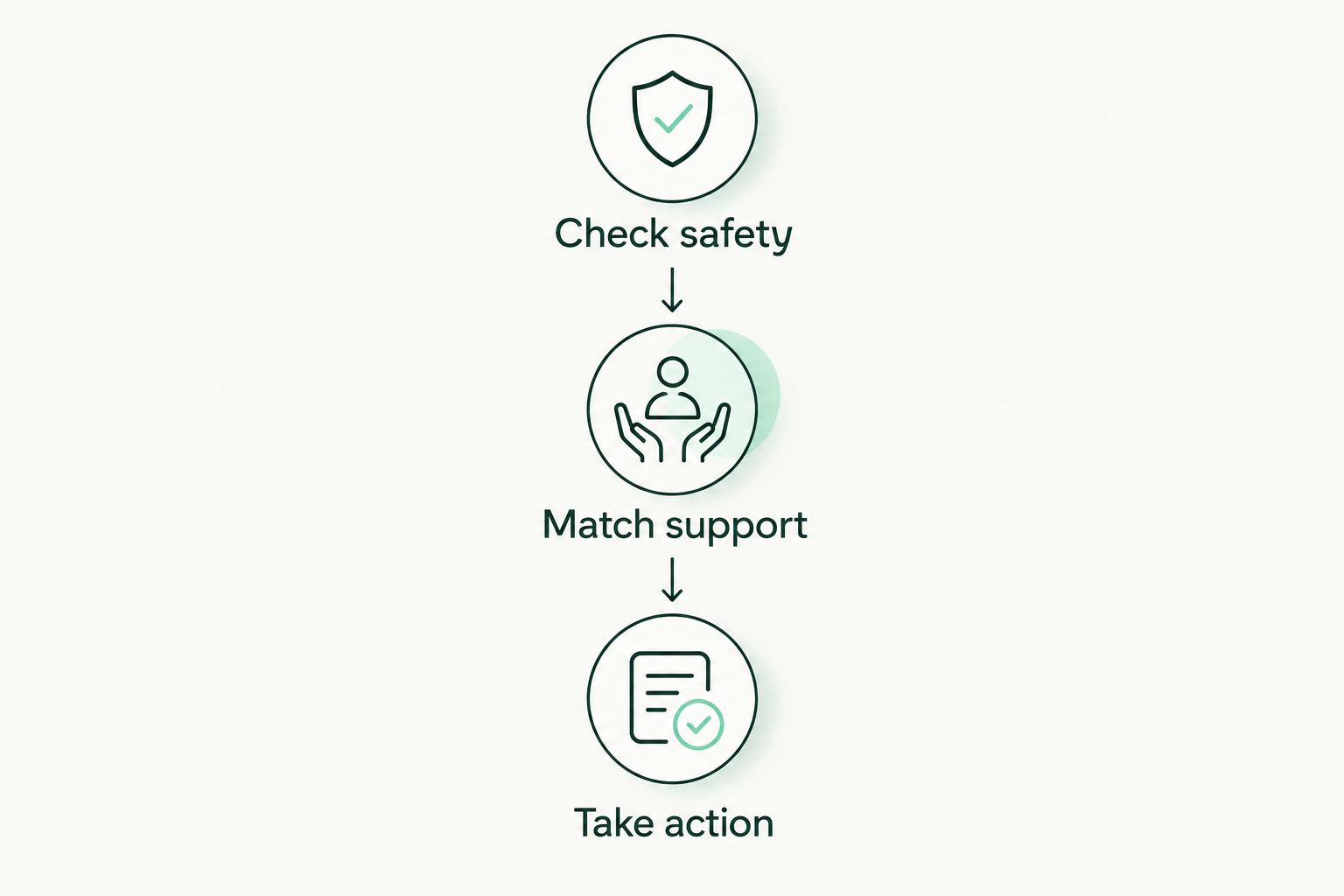
Use this sequence to keep your next move manageable:
- Check safety: If you cannot work safely, follow your workplace's immediate safety process. Seek urgent help for an immediate danger to yourself or others.
- Match support: Choose assessment, workplace action, peer connection, or parenting support according to the problem.
- Take action: Arrange one conversation or appointment, then identify what needs to happen next.
In the United States, call or text 988 for suicide or mental health crisis support. Call 911 for an immediate life-threatening emergency. A guide, colleague conversation, or routine appointment is not emergency care.
FAQ
What's the best burnout recovery resource for healthcare workers?
A licensed mental health professional is the strongest starting point when distress persists or affects daily functioning. For workplace causes, use organizational support alongside personal care rather than expecting self-help to change working conditions.
Is an employee assistance program better than seeing a therapist?
An employee assistance program and a therapist serve different roles. Ask the EAP what support and referrals it offers, then choose clinical care according to your needs rather than assuming the program provides ongoing treatment.
Can a PDF guide help a burned-out nurse?
A PDF guide can provide self-guided advice within its stated topic, but it cannot assess symptoms or treat a mental health condition. Pdfcanopy's parenting burnout guide is a specific fit for nurses who also parent neurodivergent children.
What should I ask before using workplace peer support?
Ask about confidentiality, documentation, boundaries, and what happens if a safety concern arises. Peer support offers connection, not a substitute for clinical assessment.
Can self-care fix burnout caused by working conditions?
Self-care cannot change staffing, workload decisions, or organizational policies. Personal support and workplace action address different needs and can belong in the same plan.
Is burnout the same thing as depression?
Burnout and depression are not interchangeable labels. WHO ICD-11 describes burnout as an occupational phenomenon; a qualified clinician can assess symptoms and other health concerns.
What if I need help right now rather than a recovery guide?
In the United States, call or text 988 for suicide or mental health crisis support, or call 911 for an immediate life-threatening emergency. Do not wait to finish a guide before seeking urgent help.
One last thing
Before adding a new recovery task in 2026, identify an existing demand you can ask to change, share, or remove. Bring that request to the person with authority to help. Recovery should not become another job you are expected to perform perfectly.