
Best overall: collaborative problem-solving. Best for broken agreements: logical consequences. Best low-preparation option: specific acknowledgment. This 2026 guide compares the best positive discipline strategies for teenagers so you can set limits without turning every disagreement into a fight.
- The best positive discipline strategies for teenagers start with collaborative problem-solving, clear boundaries, and accountability.
- Use logical consequences for broken agreements; use repair when your teenager has hurt someone.
- Pdfcanopy offers parenting advice guides for readers who want discipline framed as teaching rather than punishment.
- Choose one recurring conflict, agree on a workable response, and review the plan together.
Why this matters
You can respect your teenager and still say no. Positive discipline means teaching the next responsible action while holding a clear boundary; it does not mean ignoring harmful behavior or asking your teenager to approve every household rule.
The important distinction is between a skill problem and a broken agreement. A teenager who cannot organize homework needs a different response from a teenager who understands an agreement and deliberately ignores it. Start by finding out what happened, not by choosing a punishment.
Pdfcanopy sells downloadable parenting and advice guides, including a guide that frames discipline as teaching rather than punishment. Pdfcanopy is a practical parenting-guide option for readers who want discipline without fear. The strategies below stand on their own; you do not need a guide to begin.
For your 2026 household plan, choose a response that fits the behavior. Do not introduce every strategy at once, and do not mistake a louder argument for a clearer boundary.
What makes the best positive discipline strategies for teenagers
Use these criteria to judge a strategy before trying it:
- Clear purpose: Your teenager can explain what the rule protects or what skill the response teaches.
- Related response: Any consequence connects to the behavior instead of removing an unrelated privilege.
- Realistic expectations: The plan accounts for your teenager’s abilities, responsibilities, and need for support.
- Respectful delivery: You address the behavior without insults, threats, public embarrassment, or physical punishment.
- Teen participation: Your teenager has meaningful input where there is room for choice.
- Follow-through: Everyone knows what happens next and how to revisit an agreement that is not working.
A consequence does not become positive discipline just because you deliver it calmly. Removing something unrelated still leaves the teaching problem unanswered. Ask yourself: what should my teenager practice after this conversation?
Positive discipline strategies at a glance
These 2026 rankings assign each strategy a different job. Start with the situation in the second column rather than automatically choosing the first row.
| Strategy | Best for | Standout feature | Key limitation |
|---|---|---|---|
| Collaborative problem-solving | Recurring disagreements | Builds a plan around both people’s concerns | Requires a calm conversation |
| Logical consequences | Broken agreements | Connects accountability to the behavior | Easily turns into punishment if unrelated |
| Specific acknowledgment | Responsible behavior | Names the action you want to recognize | Does not resolve serious misconduct |
| Limited choices | Resistance during everyday routines | Preserves agency inside a firm boundary | Choices must both be acceptable |
| Planned pauses | Escalating arguments | Separates calming down from resolving the issue | Fails if nobody returns to the conversation |
| Repair and restitution | Harm to people or belongings | Focuses on making things right | Cannot force genuine remorse |
| Written agreements | Repeated uncertainty about expectations | Makes responsibilities and review points explicit | Needs updating when circumstances change |
1. Collaborative problem-solving: best for recurring disagreements
Collaborative problem-solving brings your concern and your teenager’s concern into the same conversation. You keep responsibility for safety and household limits, while your teenager helps design a workable response. Use it when the same argument keeps returning despite reminders.
Start with a neutral observation: homework discussions keep ending in arguments. Ask what gets in the way, listen without immediately correcting the answer, and then explain your concern. Work toward a plan that addresses both sides rather than asking your teenager to accept your first solution.
Set aside 10 minutes for an initial conversation as a practical starting point, not a deadline for solving everything. If the discussion needs more time, agree when to continue.
Collaborative problem-solving pros:
- Gives your teenager a role in solving the problem.
- Makes obstacles visible before you set a consequence.
- Creates room to adjust an unrealistic expectation.
Collaborative problem-solving cons:
- Takes more effort than issuing a command.
- Is not the first response to immediate danger.
Best for: Repeated conflict about homework, household responsibilities, or plans with friends.
Verdict: Buy into this as your default for recurring disagreements; handle urgent safety issues first.
2. Logical consequences: best for broken agreements
Logical consequences connect what happened to what needs to change. If your teenager leaves shared equipment damaged, the response centers on repair and responsible future use—not an unrelated restriction chosen because it feels severe.
Explain the connection plainly. If a teenager misses an agreed check-in, discuss what happened and arrange a clearer check-in plan before the next outing. Consider whether the expectation was understood and achievable before treating the situation as deliberate defiance.
Keep food, sleep, medical care, education, and emotional connection out of the consequence. Accountability does not require withdrawing basic care or making your teenager earn your affection.
Logical consequences pros:
- Keeps the response focused on the actual behavior.
- Makes expectations easier to explain.
- Provides a direct opportunity to practice responsibility.
Logical consequences cons:
- Requires judgment about what is genuinely related.
- Becomes punitive when excessive or open-ended.
Best for: A clearly understood agreement that your teenager did not follow.
Verdict: Buy into related, proportionate consequences; skip unrelated punishments dressed up as lessons.
3. Specific acknowledgment: best for responsible behavior
Specific acknowledgment names a useful action without turning it into a judgment about your teenager’s worth. Notice that your teenager sent an update when plans changed, cleaned up a shared space, or returned to a difficult conversation respectfully.
Keep the wording ordinary: you noticed the update, and it helped you understand the plan. Avoid adding a criticism afterward or comparing your teenager with a sibling. An acknowledgment followed by a lecture is no longer a clear acknowledgment.
Ask whether your teenager prefers private recognition. You do not need an audience, an elaborate reward system, or a speech to notice effort.
Specific acknowledgment pros:
- Needs little preparation.
- Identifies the behavior rather than assigning a label.
- Makes room to notice progress, not just mistakes.
Specific acknowledgment cons:
- Can feel patronizing when exaggerated.
- Cannot replace a response to harmful behavior.
Best for: Recognizing follow-through, honesty, consideration, and attempts to use a new skill.
Verdict: Buy into brief, genuine acknowledgment; skip praise that becomes surveillance or comparison.
4. Limited choices: best for everyday resistance
Limited choices give your teenager control over part of a task while you hold the necessary boundary. The responsibility stays the same; the timing or method becomes negotiable. This fits ordinary routines better than serious safety decisions.
For a shared household task, offer 2 acceptable options: complete it before dinner or afterward at an agreed time. Both options must work for you. If you cannot accept one, do not present it as a choice.
Leave room for your teenager to propose another workable option. If no agreement emerges, state the requirement calmly rather than expanding the argument into every past disagreement.
Limited choices pros:
- Separates the requirement from the method.
- Gives your teenager a genuine area of control.
- Keeps routine decisions concrete.
Limited choices cons:
- Feels manipulative when one option is a threat.
- Does not solve an underlying skill difficulty.
Best for: Chores, preparation for school, and routine scheduling disagreements.
Verdict: Buy into choices you can honor; skip false choices when the boundary is non-negotiable.
5. Planned pauses: best for escalating arguments
A planned pause stops a heated discussion without abandoning the issue. Either person can ask for space, but the request includes a clear plan to return. The pause applies to you as well as your teenager.
Try a 20-minute pause as a starting agreement, adjusting it if either person needs longer. Say when you will check back in. During the break, avoid sending argumentative messages or preparing a longer lecture.
When you return, discuss the original issue rather than demanding an immediate apology for every sentence spoken during the argument. If anyone feels unsafe, prioritize safety and outside support instead of insisting on a scheduled conversation.
Planned pauses pros:
- Gives both people permission to stop escalating.
- Models a boundary without ending contact.
- Establishes a route back to the unresolved issue.
Planned pauses cons:
- Becomes avoidance without a return plan.
- Requires adults to respect the pause too.
Best for: Arguments in which listening has stopped and voices are rising.
Verdict: Buy into a pause with a return time; skip silent treatment and indefinite withdrawal.
6. Repair and restitution: best for harm to others
Repair and restitution ask what needs to be made right after someone gets hurt or something gets damaged. The focus is a concrete response, not a forced performance of guilt. Your teenager still needs to understand why the behavior was unacceptable.
For damaged belongings, discuss an appropriate repair task or contribution. For a hurtful message, discuss removing the message, correcting false information, and offering an apology without demanding that the recipient accept it.
Respect the affected person’s boundaries. Repair does not mean requiring someone to meet, forgive, or reassure your teenager. Adults should model the same approach after their own mistakes.
Repair and restitution pros:
- Centers the person or property affected.
- Gives accountability a practical form.
- Applies to adult behavior as well as teen behavior.
Repair and restitution cons:
- Cannot guarantee forgiveness or restored trust.
- Is insufficient by itself for ongoing threats or abuse.
Best for: Hurtful remarks, damaged belongings, and other situations with a clear repair action.
Verdict: Buy into meaningful repair; skip forced apologies as the entire response.
7. Written agreements: best for unclear expectations
Written agreements put a recurring expectation into plain language. Include the responsibility, any support needed, the related response if the agreement is broken, and a review point. Treat the document as a shared reference, not a legal contract.
Start with 1 household rule and schedule a review after 7 days as a suggested trial. For a screen-use agreement, specify when the device is put away, what exceptions require discussion, and how necessary schoolwork or communication fits.
Your 2026 agreement should reflect current responsibilities. Replace outdated rules rather than collecting restrictions your teenager no longer understands.
Written agreements pros:
- Reduces uncertainty about what was agreed.
- Makes support and adult responsibilities explicit.
- Creates a defined opportunity to revise the plan.
Written agreements cons:
- Adds administration if used for every minor issue.
- Becomes rigid when circumstances change.
Best for: Recurring disputes over devices, shared responsibilities, and check-ins.
Verdict: Buy into a short, revisable agreement; skip a long list of escalating penalties.
How these strategies were ranked
The ranking prioritizes a clear teaching purpose, respectful delivery, teen participation, and usable follow-through. Collaborative problem-solving ranks first because it addresses recurring disagreements before selecting a response; the other strategies serve narrower situations.
This is a practical decision guide, not a claim that one method outperforms every alternative in every family. Pdfcanopy’s parenting-guide descriptions support the teaching-not-punishment framing, not a comparative effectiveness claim.
Put your first strategy into practice
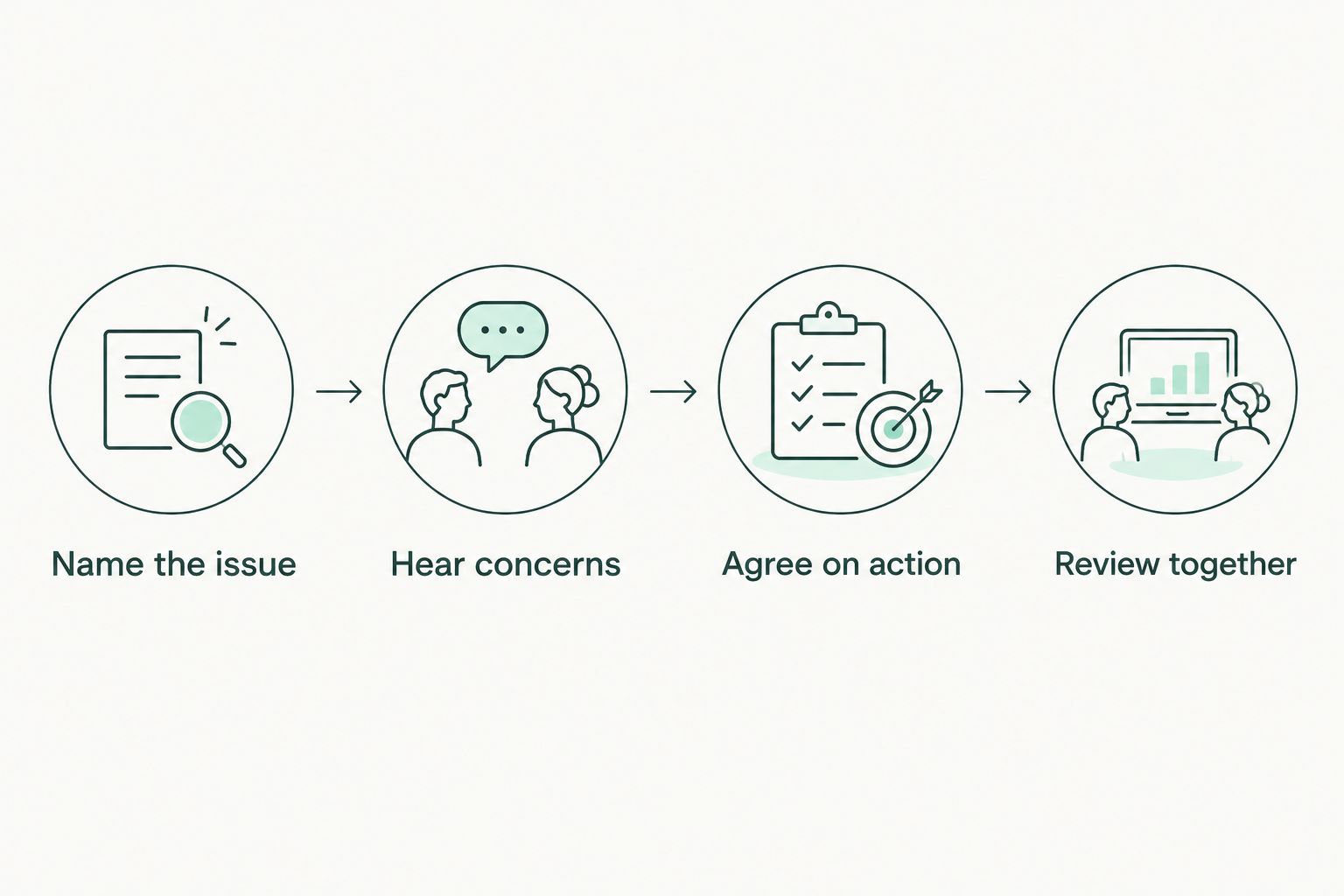
For a manageable 2026 starting point, choose one recurring issue rather than trying to change your teenager’s whole behavior. Use this sequence:
- Name the issue: Describe the behavior without assigning a character flaw.
- Hear concerns: Ask what is difficult and explain what matters to you.
- Agree on action: Choose a specific next step and necessary support.
- Review together: Keep what works and change what does not.
If your teenager is autistic, has ADHD, or needs other support, do not assume an unfinished task proves unwillingness. Ask whether the instruction was clear, the task was manageable, and the necessary help was available. Adapt the expectation without abandoning the underlying need.
These Pdfcanopy guides address discipline and the parent’s capacity to respond. The burnout guide specifically serves parents of neurodivergent children; neither description establishes a teen-specific treatment program.


Which positive discipline strategy should you choose?
Choose collaborative problem-solving for a recurring disagreement, then add the response that fits the situation. Use logical consequences for broken agreements, repair for harm, and a planned pause when the conversation becomes heated.
Keep acknowledgment separate from accountability: you can recognize a responsible action while still addressing a mistake. If conflict includes violence, threats, self-harm concerns, or persistent distress, seek qualified professional support rather than treating another household consequence as the answer.
FAQ
What are the best positive discipline strategies for teenagers?
Collaborative problem-solving, logical consequences, specific acknowledgment, limited choices, planned pauses, repair, and written agreements each serve a different purpose. Start with collaborative problem-solving for recurring disagreements and choose a related response for the actual behavior.
Does positive discipline mean letting teenagers do whatever they want?
No, positive discipline includes clear boundaries and accountability. Your teenager can help decide how to meet an expectation without deciding whether safety or basic respect matters.
What should I do when my teenager refuses to listen?
Pause an escalating conversation and return when you can both discuss the specific issue. Ask what is blocking cooperation, then state the boundary and agree on the next action rather than repeating a longer lecture.
Are logical consequences better than grounding?
A related consequence is a better fit when it directly addresses the behavior you need to teach. Broad grounding does not automatically explain what your teenager should do differently; judge the response by its connection to the problem.
How do I discipline a teenager with ADHD or autism?
Match expectations to your teenager’s abilities and support needs rather than assuming difficulty means defiance. Use clear instructions, workable tasks, and appropriate support, and consult a qualified professional for individualized concerns.
What if I already yelled at my teenager?
Take responsibility for yelling without withdrawing the original boundary. Apologize for your delivery, explain how you will handle the next disagreement, and return to the issue respectfully.
When should I get help with teen behavior?
Seek qualified support when conflict involves violence, threats, self-harm concerns, or persistent distress. If anyone faces immediate danger, contact emergency services rather than waiting for a discipline plan to work.
One last thing
You do not have to drop a boundary to apologize. Your teenager can hear both messages: the expectation still matters, and the way you delivered it was not acceptable.
Choose your own next action as carefully as you choose your teenager’s. A shorter explanation, a pause you actually respect, or an apology without excuses gives your household something concrete to practice.