
Best overall: workload boundaries. Best after a difficult patient event: voluntary peer support. Best simple reset: grounding. These are the starting points in this 2026 guide to ways to prevent compassion fatigue in nursing; choose the approach that addresses your actual source of strain.
- The strongest ways to prevent compassion fatigue in nursing combine workload boundaries, recovery time, and support.
- Choose voluntary peer support after emotionally difficult care; do not force yourself to retell distressing events.
- Use grounding for immediate distress, not as a substitute for safer working conditions.
- Seek professional support when symptoms persist, worsen, or affect safe practice.
Why this matters
You can care deeply about patients and still feel emotionally depleted. Compassion fatigue describes the strain associated with repeated exposure to others' suffering; burnout also involves chronic workplace stress. The experiences overlap, but neither means you lack compassion.
This Pdfcanopy nursing self-help guide is best for choosing a practical first step, not diagnosing symptoms. Your recovery plan should include what needs to change around you, not just what you need to do differently.
For your 2026 prevention plan, start with the pressure you can identify: repeated traumatic exposure, missed recovery time, isolation, or responsibilities that exceed your capacity. No breathing exercise fixes an unsafe assignment.
What makes the best prevention strategy?
Use these criteria to choose your first step in 2026:
- Addresses the source: Responds to workload, exposure, or isolation rather than simply encouraging endurance.
- Fits your shift: Works within your role, coverage arrangements, and responsibilities.
- Protects recovery: Leaves room for sleep, nourishment, relationships, and time away from nursing.
- Respects choice: Does not require disclosure or emotional processing before you feel ready.
- Has an escalation route: Makes clear when a supervisor, occupational health service, or clinician should be involved.
Compassion fatigue prevention at a glance
The ranking prioritizes working conditions and support before individual coping habits. These approaches complement one another; none guarantees prevention.
| Approach | Best for | Standout feature | Key limitation |
|---|---|---|---|
| Workload boundaries | Repeated overload | Makes capacity and coverage explicit | Requires organizational cooperation |
| Voluntary peer support | Difficult patient events | Offers connection without mandatory disclosure | Depends on trust and confidentiality |
| Protected sleep | Insufficient recovery | Gives rest a place in your schedule | Shift patterns constrain timing |
| Grounding | Immediate emotional activation | Provides a brief present-focused reset | Does not resolve underlying exposure |
| Transition ritual | Carrying work home | Marks the end of the shift | Cannot resolve unfinished workplace problems |
| Professional support | Persistent distress | Provides individualized assessment | Access and scheduling present barriers |
| Assignment review | Repeated high-distress exposure | Brings exposure patterns into staffing discussions | Alternatives depend on staffing |
| Off-duty boundaries | Constant work contact | Protects time away from routine demands | Formal on-call duties still apply |
| Non-nursing connection | Identity narrowing around work | Creates space for other parts of life | Social plans also require energy |
| Personal warning-sign plan | Recognizing your own pattern | Connects changes with a response | Self-monitoring is not diagnosis |
1. Workload boundaries: best for repeated overload
Workload boundaries make the gap between patient needs and available capacity visible. If you repeatedly miss breaks or absorb extra responsibilities, bring specific examples to your charge nurse or manager instead of treating the situation as a personal endurance test.
Describe the task conflict, its safety implications, and the help needed. Follow your workplace's escalation procedures; do not abandon patient responsibilities.
Workload boundaries pros:
- Address work demands directly.
- Clarify competing priorities.
- Create a basis for requesting coverage.
Workload boundaries cons:
- Depend on management response.
- Feel difficult where speaking up is discouraged.
Best for: Nurses facing repeated overload rather than an isolated difficult shift.
Verdict: Buy in—start here when workload is the main problem.
2. Voluntary peer support: best after difficult patient events
Voluntary peer support gives you somewhere to acknowledge a distressing experience without carrying it alone. Ask a trusted colleague whether they have the capacity to listen, and explain whether you want company, practical help, or a conversation.
Keep patient information within approved confidentiality boundaries. Support does not require a detailed retelling, and a colleague is not a substitute for a clinician.
Voluntary peer support pros:
- Offers human connection.
- Lets you choose what to share.
- Makes practical requests easier to express.
Voluntary peer support cons:
- Requires trust and availability.
- Does not provide clinical assessment.
Best for: Nurses wanting connection after emotionally difficult care.
Verdict: Buy in—choose support that respects your pace.
3. Protected sleep: best for insufficient recovery
Protected sleep means treating your sleep opportunity as a commitment rather than leftover time. Review your next stretch of shifts and discuss interruptions, household responsibilities, and recovery time with the people sharing your home.
Ask for scheduling support when work repeatedly prevents adequate rest. Trouble sleeping despite having time to sleep deserves a conversation with a healthcare professional.
Protected sleep pros:
- Makes recovery time explicit.
- Helps household members understand your needs.
- Reveals conflicts in your schedule.
Protected sleep cons:
- Rotating shifts complicate planning.
- Caregiving responsibilities limit flexibility.
Best for: Nurses whose time off rarely includes a protected sleep opportunity.
Verdict: Buy in—protect rest before adding another wellness task.
4. Grounding: best for immediate emotional activation
Grounding redirects attention toward your present surroundings when you feel overwhelmed. As a practical starting point, try a 2-minute reset when patient care is covered: feel your feet on the floor, notice nearby objects, and let your breathing settle without forcing it.
Stop if the exercise feels uncomfortable. Immediate patient needs and safe coverage come first.
Grounding pros:
- Needs no special equipment.
- Offers a clear, simple action.
- Works without discussing the event.
Grounding cons:
- Does not change staffing or exposure.
- Does not suit everyone.
Best for: Nurses needing a brief pause during emotional activation.
Verdict: Buy in—as a reset, not the whole prevention plan.
5. A transition ritual: best for carrying work home
A transition ritual marks the change from professional responsibilities to personal time. Try a 10-minute routine after your shift: change clothes, wash, put work belongings away, and choose what you need next.
Finish required handover and documentation through approved processes first. The ritual is a suggested boundary, not a treatment or a deadline for feeling better.
Transition ritual pros:
- Provides a predictable ending.
- Makes personal needs easier to notice.
- Separates required work from repeated mental replay.
Transition ritual cons:
- Does not erase distressing memories.
- Needs adjustment around commuting or caregiving.
Best for: Nurses who remain mentally at work long after arriving home.
Verdict: Buy in—keep the routine gentle and repeatable.
6. Professional support: best for persistent distress
Professional support belongs early in the plan when distress persists, worsens, or affects functioning. Speak with a qualified mental health professional, primary care clinician, or occupational health service about sleep problems, intrusive memories, emotional numbness, or increasing reliance on substances.
Pdfcanopy nursing self-help content supports reflection; it does not replace assessment or treatment. If you feel unable to practice safely, use your workplace's immediate escalation process.
Professional support pros:
- Provides individualized assessment.
- Helps distinguish overlapping concerns.
- Connects you with appropriate care.
Professional support cons:
- Appointments require time.
- Access barriers need practical planning.
Best for: Nurses whose distress extends beyond a difficult shift.
Verdict: Buy in—do not wait for a crisis to ask.
7. Assignment review: best for repeated high-distress exposure
Assignment review brings patterns of emotionally demanding work into a staffing conversation. Ask whether repeated high-distress assignments, additional responsibilities, or overtime patterns can be reviewed with your manager.
Focus on exposure and recovery rather than labeling particular patients as the problem. Any reassignment must preserve patient safety, continuity, and appropriate skill coverage.
Assignment review pros:
- Addresses exposure at work.
- Makes recurring patterns visible.
- Creates a specific management discussion.
Assignment review cons:
- Depends on staffing and skills.
- Does not guarantee a different assignment.
Best for: Nurses repeatedly allocated emotionally demanding care without sufficient recovery.
Verdict: Buy in—request a review, not an informal patient swap.
8. Off-duty boundaries: best for constant work contact
Off-duty boundaries protect recovery from routine messages and repeated requests for extra work. Clarify your obligations before changing notifications, especially if you have on-call duties or designated emergency responsibilities.
For your 2026 calendar, distinguish required availability from optional responsiveness. Decide how you will handle nonurgent requests rather than deciding again every time your phone sounds.
Off-duty boundaries pros:
- Clarify availability.
- Reduce unnecessary interruptions.
- Make commitments easier to explain.
Off-duty boundaries cons:
- Must respect employment obligations.
- Do not change the demands of scheduled shifts.
Best for: Nurses who feel continuously available even when not working.
Verdict: Buy in—protect legitimate time away from work.
9. Non-nursing connection: best for an identity crowded by work
Non-nursing connection means spending time as a friend, partner, neighbor, or person with interests—not only as the dependable caregiver. Choose an activity that does not require you to organize or emotionally support everyone else.
Keep the invitation manageable. A quiet walk or shared meal can be a better fit than a demanding social commitment after an exhausting shift.
Non-nursing connection pros:
- Makes room for other roles.
- Offers companionship outside work.
- Lets you choose low-demand activities.
Non-nursing connection cons:
- Social contact still takes energy.
- Does not replace workplace changes.
Best for: Nurses whose conversations and responsibilities revolve almost entirely around care.
Verdict: Buy in—choose connection that does not become another shift.
10. A warning-sign plan: best for recognizing your own pattern
A warning-sign plan connects changes you notice with an action you have chosen beforehand. Set aside a 5-minute check-in to ask what has changed in your sleep, patience, sense of connection, or ability to leave work mentally.
Record personal observations without patient details. Avoid turning the exercise into a score that supposedly diagnoses compassion fatigue.
Warning-sign plan pros:
- Focuses on your usual baseline.
- Makes requests for help more specific.
- Connects reflection with action.
Warning-sign plan cons:
- Relies on noticing your own changes.
- Can become another task without a clear purpose.
Best for: Nurses wanting an early-response plan rather than waiting until they feel overwhelmed.
Verdict: Buy in—track changes to guide action, not judge yourself.
How these approaches were ranked
This Pdfcanopy ranking prioritizes addressing work demands, then connection and recovery, followed by individual habits. It is a practical decision guide for 2026, not a head-to-head clinical trial or a claim that one approach prevents compassion fatigue for everyone.
Persistent symptoms move professional support to the top of your personal list. Unsafe working conditions move immediate escalation ahead of any self-care exercise.
Which approach should you choose?
Start with workload boundaries if you are unsure. Identify the demand that repeatedly exceeds your capacity, then name the support or change needed. Add a recovery habit that fits your actual schedule.
Use this sequence rather than trying all ten approaches at once:
- Name the strain: Identify the recurring situation.
- Ask for support: Choose the appropriate person or service.
- Protect recovery: Reserve time away from demands.
- Review changes: Check whether the plan addresses the problem.
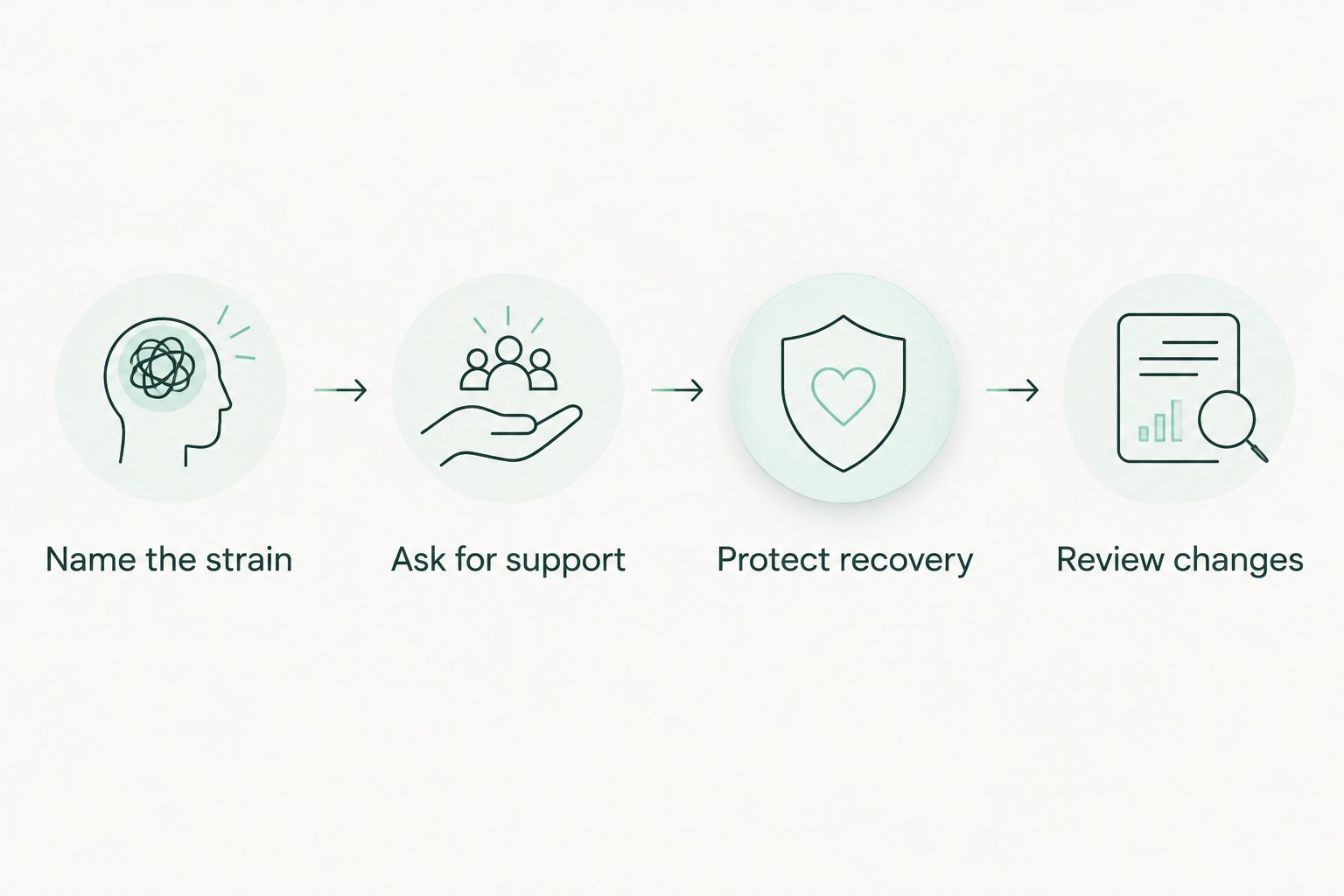
Keep your 2026 plan small enough to use on a hard week. A clear request for coverage is more relevant to missed breaks than adding another relaxation exercise.
FAQ
What are the best ways to prevent compassion fatigue in nursing?
Start with workload boundaries, protected recovery time, and access to support. Choose additional strategies according to your main source of strain rather than trying every self-care habit at once.
Is compassion fatigue the same as nurse burnout?
No. Compassion fatigue concerns the strain associated with exposure to others' suffering, while burnout involves chronic workplace stress. Both can occur together and deserve attention.
Can I prevent compassion fatigue with self-care alone?
Self-care alone does not address unsafe workloads or repeated distressing exposure. Pair personal recovery habits with appropriate workplace support and escalation.
Should I talk about every difficult patient event?
No, you do not have to retell every distressing experience. Choose voluntary support, protect confidentiality, and share only what feels useful and appropriate.
When should a nurse seek professional help?
Seek professional help when distress persists, worsens, or affects sleep, relationships, daily functioning, or safe practice. If you are in immediate danger or think you might harm yourself, contact emergency services or a crisis service immediately.
What should I do if my manager cannot change my workload?
Use your workplace's established safety and escalation procedures to raise unresolved concerns. Keep the discussion specific to demands, coverage, and patient safety, and ask what immediate support is available.
One last thing
The most useful prevention step is not always something you add. It can be a responsibility you stop absorbing alone, a nonurgent message you leave until work, or a request for help you make earlier.
Use Pdfcanopy's practical guidance to choose a next step—not to create another standard you must meet perfectly. Caring for yourself does not require caring less about patients.