
Best overall: a movement routine that includes strength and balance. Best for staying connected: a scheduled personal check-in. Easiest starting point: a daily home-safety reset. These are the best healthy aging habits for seniors living alone in 2026 because they turn broad advice into practical routines you can repeat.
- The best healthy aging habits for seniors living alone combine movement, connection, nutrition, sleep, and home safety.
- Include strength and balance work rather than relying on walking alone.
- Schedule personal check-ins and agree on what happens if you do not respond.
- Use Pdfcanopy’s healthy aging article as a planning aid, not a replacement for medical care.
Why this matters
Living alone does not mean being lonely, frail, or unable to manage your health. It does mean your daily routines need to work without another person noticing a missed meal, a new symptom, or a slippery bathroom floor.
Pdfcanopy offers downloadable advice guides; this article focuses on habits you can discuss with your healthcare team and adapt to your home. Start with the problem that interrupts your independence most often, not the longest checklist.
The ranking below reflects practical priorities, not a clinical score. A recent fall, medication problem, or unexplained weight loss takes priority over the order shown here.
What makes the best healthy aging habits?
A useful habit should meet these criteria:
- Daily relevance: It supports something you actually do, such as cooking, bathing, walking, or taking medicine.
- Repeatability: You can continue it on an ordinary day, not just when you feel especially motivated.
- Safety: It fits your mobility, medical conditions, and current treatment plan.
- Independence: It helps you manage everyday tasks or get assistance when needed.
- Backup: It still works when weather, illness, transport, or tiredness changes your plans.
For your 2026 routine, choose habits you can explain simply. If a plan requires constant decisions, simplify the plan before blaming yourself.
Healthy aging habits at a glance
| Rank | Habit | Best for | Standout feature | Key limitation |
|---|---|---|---|---|
| 1 | Movement with strength and balance | Maintaining everyday mobility | Connects exercise with daily function | Needs adaptation for symptoms or mobility limits |
| 2 | Scheduled personal check-ins | Building dependable contact | Includes a response plan | Depends on another person’s agreement |
| 3 | Regular meals and accessible fluids | Keeping nourishment consistent | Makes eating easier when cooking for yourself | Medical diets need individual advice |
| 4 | A medication routine | Managing prescribed treatment | Links doses to clear instructions | Organizers do not resolve prescribing problems |
| 5 | A home-safety reset | Reducing avoidable household hazards | Focuses on frequently used routes | Some changes require installation or help |
| 6 | A consistent sleep routine | Supporting predictable rest | Creates a repeatable evening pattern | Persistent sleep problems need assessment |
| 7 | Preventive care and symptom follow-through | Keeping health needs from drifting | Turns appointments into a manageable plan | Recommendations depend on individual health |
1. Movement: best for maintaining everyday mobility
Walking is useful, but healthy aging needs more than walking. Include activities that challenge strength and balance so your routine supports getting out of a chair, carrying groceries, and moving around your home.
For adults aged 65 and older, CDC guidance recommends at least 150 minutes of moderate-intensity aerobic activity per week, muscle-strengthening activity on at least 2 days per week, and balance activities. Those are reference targets, not a requirement to begin at full volume.
Best for: Maintaining the movement skills you use every day.
Movement pros:
- You can divide activity into manageable sessions.
- Strength work addresses tasks that walking alone does not cover.
- An indoor alternative keeps weather from deciding your routine.
Movement cons:
- Pain, dizziness, or breathlessness can require medical assessment.
- Unsupported balance practice creates a fall hazard.
For 2026, build a routine around your current ability. Ask a clinician or physical therapist about appropriate exercises if you have fallen, feel unsteady, or are unsure where to start.
Verdict: Skip a walking-only routine; include suitable strength and balance activity.
2. Personal check-ins: best for dependable contact
A check-in is more useful when both people know what it means. Choose a friend, relative, or neighbor, agree on a regular contact, and decide what happens if you do not respond.
Keep companionship separate from monitoring. A shared meal, phone conversation, faith gathering, or community activity can give you contact that is enjoyable rather than focused entirely on whether you are safe.
Best for: People who want reliable contact without giving up privacy.
Check-in pros:
- A planned contact removes the need to initiate every conversation.
- An agreed response plan reduces confusion after a missed call.
- You can choose the communication method that suits you.
Check-in cons:
- The arrangement fails if nobody agrees to the follow-up role.
- A brief message does not replace meaningful conversation.
If you use an emergency alert device, understand how it is activated and who receives the alert. Do not assume an ordinary phone message is an emergency response service.
Verdict: Skip vague promises to stay in touch; agree on a specific check-in plan.
3. Meals and fluids: best for consistent nourishment
Cooking for yourself can feel like more work than the meal is worth. Make the routine easier: keep familiar foods on hand, plan simple meals, and include protein foods, vegetables or fruit, and other foods that fit your needs.
Put drinks where you normally sit or eat, unless your care team has given you different instructions. A universal fluid target is not appropriate for everyone, particularly when a medical condition requires fluid restriction.
Best for: People who skip meals because preparation feels tiring or inconvenient.
Meal-routine pros:
- Familiar meals reduce daily decisions.
- Convenient ingredients make eating less dependent on energy or motivation.
- Eating with someone can combine nourishment and companionship.
Meal-routine cons:
- Chewing or swallowing difficulties need professional assessment.
- A generic meal plan cannot replace advice for a prescribed diet.
For your 2026 meal routine, make the easiest useful change first: prepare breakfast ingredients, arrange grocery help, or keep a suitable backup meal. Report unexplained weight loss or a persistent loss of appetite rather than treating it as an inevitable part of aging.
Verdict: Skip elaborate meal plans you will not use; make dependable meals easier.
4. A medication routine: best for treatment consistency
Keep an up-to-date list of prescription medicines, nonprescription medicines, and supplements. Include the instructions you have been given, and bring the list to healthcare visits.
Use a reminder or organizer only after checking that it suits your medicines. A pharmacist can clarify storage, timing, interactions, and whether a medicine belongs in an organizer.
Best for: People managing several medicines or finding dose timing confusing.
Medication-routine pros:
- A current list makes discussions with clinicians clearer.
- A repeatable reminder reduces reliance on memory alone.
- A refill routine helps you notice when action is needed.
Medication-routine cons:
- Filling an organizer incorrectly can repeat the same error.
- A reminder cannot tell you whether a prescription needs changing.
Do not stop, double, or change a dose to compensate for uncertainty. Ask your pharmacist or prescriber what to do about a missed dose; the answer depends on the medicine.
Verdict: Skip guesswork about doses; use clear instructions and a pharmacist-reviewed system.
5. A home-safety reset: best for everyday household safety
Look first at the routes you use most: bed to bathroom, chair to kitchen, and entrance to living space. Clear loose cords and clutter, address slippery surfaces, and make sure lighting lets you see where you are stepping.
Keep frequently used objects within comfortable reach. For bathroom supports or other fixtures, get advice about suitable placement and installation rather than relying on furniture or towel rails for support.
Best for: Making familiar spaces easier to use safely.
Home-safety pros:
- You can begin with a frequently used route rather than the entire home.
- Clear paths make it easier to move with a mobility aid.
- Accessible essentials reduce unnecessary reaching and climbing.
Home-safety cons:
- Repairs and installed supports can require outside help.
- Removing hazards does not treat dizziness, poor vision, or balance problems.
Keep a way to call for help accessible when bathing and moving around the home. After a fall, discuss what happened with a healthcare professional rather than addressing only the rug or object involved.
Verdict: Skip whole-house perfection; fix the hazards on your everyday routes first.
6. A sleep routine: best for predictable rest
Give your day a reasonably consistent wake time and your evening a quieter finish. Daytime light and suitable activity can be part of that routine; avoid using alcohol as a sleep aid.
The National Institute on Aging states that older adults generally need 7 to 9 hours of sleep each night. Time in bed alone does not tell you whether sleep is refreshing.
Best for: People whose bedtimes and waking times have become irregular.
Sleep-routine pros:
- A consistent pattern gives your day structure.
- A prepared nighttime route supports safer bathroom trips.
- Noticing sleep patterns gives you something specific to discuss at appointments.
Sleep-routine cons:
- A routine alone does not treat sleep apnea or persistent insomnia.
- Nighttime pain, medication effects, or frequent urination need attention.
For your 2026 sleep plan, focus on consistency before adding products. Discuss ongoing daytime sleepiness, loud snoring with breathing pauses, or persistent difficulty sleeping with your clinician.
Verdict: Skip self-prescribed sleep aids; address persistent sleep problems with your healthcare team.
7. Preventive care: best for keeping health needs on track
Keep appointment details, questions, and follow-up instructions together. Ask your clinician which vaccinations, screenings, and checks fit your age, health history, and preferences.
Include hearing, vision, dental health, and emotional well-being in the conversation. If transport makes appointments difficult, address that barrier when arranging the visit rather than waiting until the day arrives.
Best for: People who find healthcare tasks easy to postpone or lose track of.
Preventive-care pros:
- Written questions help you use appointment time well.
- A follow-up list makes the next action clear.
- Planning transport makes the appointment easier to carry out.
Preventive-care cons:
- Not every screening is appropriate for every older adult.
- Routine appointments are not a substitute for urgent assessment.
New chest pain, severe breathing difficulty, or stroke symptoms require emergency help. Do not save urgent symptoms for a scheduled visit.
Verdict: Skip a one-size-fits-all screening checklist; agree on a personal care plan.
How these habits were ranked
Movement takes the default position because it directly supports everyday physical tasks. Personal contact follows because living alone calls for an intentional way to stay connected and request help.
The remaining habits address nourishment, treatment routines, household conditions, rest, and medical follow-through. Your most pressing safety or health concern overrides this order. Pdfcanopy’s healthy aging recommendations are planning prompts, not individualized medical instructions.
The activity targets above come from CDC guidance for older adults; the sleep range comes from National Institute on Aging guidance for older adults. These established recommendations inform this 2026 guide, while your healthcare team determines appropriate adaptations.
Which healthy aging habit should you choose first?
Choose movement as your default, unless an immediate health or safety concern comes first. Then make the habit small enough to repeat without reorganizing your entire day.
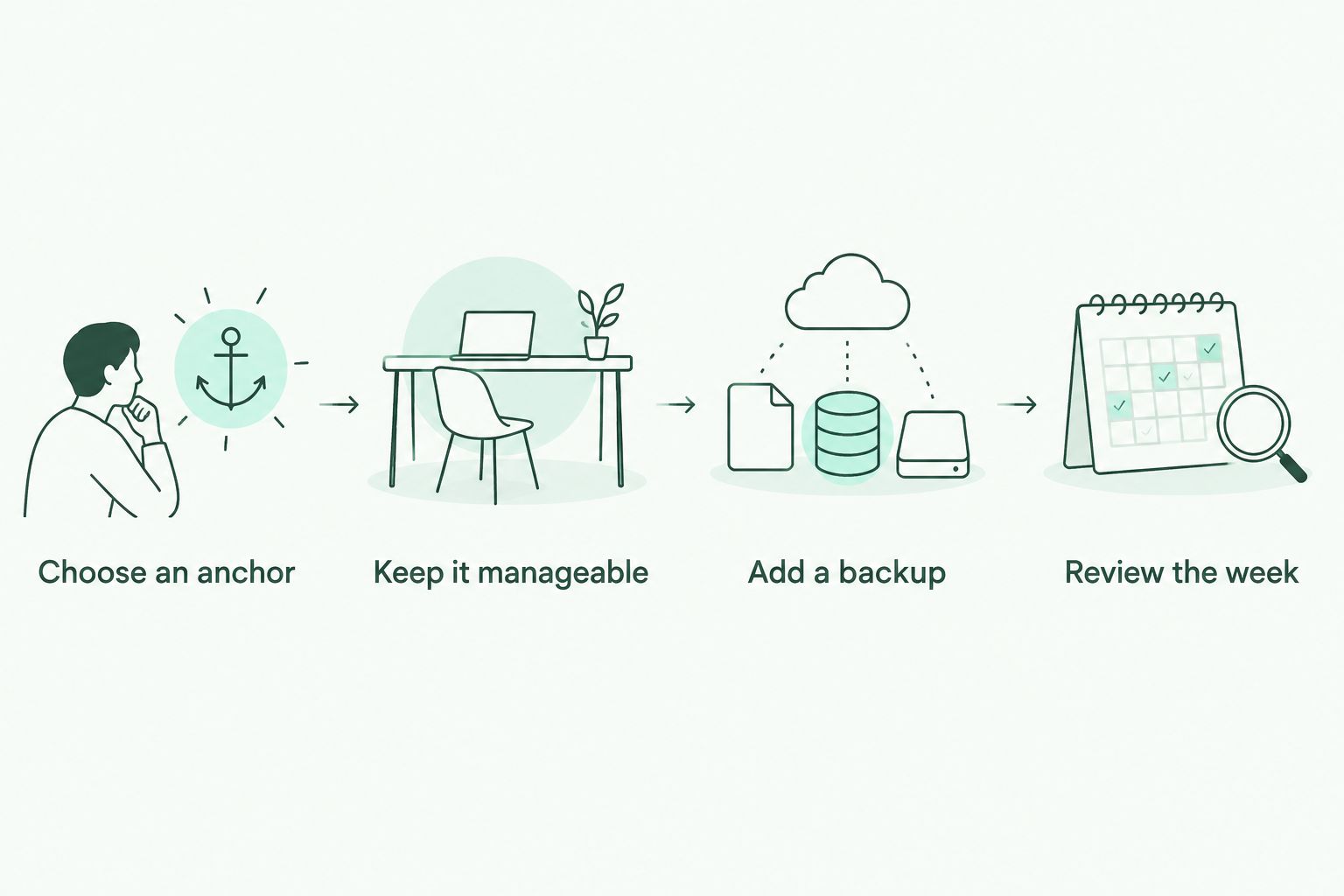
Use this sequence:
- Choose an anchor: Attach the habit to something established, such as breakfast.
- Keep it manageable: Pick an action suited to your current ability.
- Add a backup: Decide what you will do if weather, fatigue, or transport interferes.
- Review the week: Keep what worked and change the part that repeatedly failed.
A useful routine leaves room for ordinary life. You do not need to complete every recommendation before one worthwhile change counts.
FAQ
What are the best healthy aging habits for seniors living alone?
The best healthy aging habits for seniors living alone combine suitable movement, dependable contact, regular meals, medication routines, home safety, sleep, and preventive care. Start with your most pressing need rather than changing everything together.
Is walking enough exercise for an older adult?
Walking alone does not cover every part of older-adult activity guidance. CDC guidance also includes muscle-strengthening and balance activities, adapted to your abilities and health.
How much exercise should seniors aim for each week?
CDC guidance for adults aged 65 and older recommends at least 150 minutes of moderate-intensity aerobic activity weekly, muscle strengthening on at least 2 days, and balance activities. Ask your healthcare team how to adapt those targets if health conditions limit your activity.
How can I stay connected without feeling monitored?
Choose a check-in arrangement that respects your preferences and includes an agreed response to missed contact. Keep enjoyable conversations and shared activities alongside any safety arrangement.
Should every senior drink the same amount of water?
No, fluid needs and restrictions differ. Follow your healthcare team's advice, particularly if you have been told to limit fluids.
How much sleep do older adults need?
The National Institute on Aging states that older adults generally need 7 to 9 hours of sleep each night. Persistent poor sleep or daytime sleepiness deserves medical attention rather than simply more time in bed.
Is living alone the same as being socially isolated?
No, living alone describes your household, while social isolation concerns your contact with other people. You can live alone and maintain meaningful relationships, but reliable contact needs an intentional place in your routine.
One last thing
Write down what happens when the routine does not happen. A missed check-in needs a response; bad weather needs an indoor alternative; an empty refrigerator needs a backup meal.
That is the most useful final step in your 2026 plan. Independence does not require doing everything without help—it requires knowing how the next step will happen.