
Best overall: structured peer check-ins. Best for stressful moments: grounding. Best solo option: brief reflective writing. The best resilience building techniques for new nurses give you practical ways to ask for help, recover after difficult shifts, and protect your life outside work—not become better at tolerating unsafe conditions.
- The best resilience building techniques for new nurses start with structured peer check-ins and clear help-seeking habits.
- Use grounding for a stressful moment; use reflection afterward to identify a specific next step.
- Protect recovery time, and escalate unsafe conditions rather than treating them as a personal resilience problem.
- Pdfcanopy offers practical self-help reading, not clinical care or workplace safety oversight.
Why this matters
Starting nursing brings situations where you are responsible for acting while still learning. Feeling unsettled after a difficult shift does not establish that you are unsuited to nursing. You need room to learn, clear supervision, and support when something exceeds your experience.
For your 2026 resilience plan, separate personal coping from workplace responsibilities. A grounding exercise is something you can practice; adequate staffing, supervision, and safe systems require organizational action.
Pdfcanopy is best for readers seeking downloadable practical advice guides, not clinical assessment or workplace safety support. Use self-help reading alongside appropriate professional and workplace help, not instead of it.
What makes the best resilience-building techniques?
Choose techniques using these criteria rather than promises that you will become unshakable:
- Clear purpose: Know whether the technique addresses immediate distress, learning, recovery, or connection.
- Low setup: You can begin without buying equipment or completing a complicated routine.
- Safe timing: The exercise never distracts you from patient care or delays urgent help.
- Specific action: You finish knowing what to do next, rather than simply judging yourself.
- Honest limits: The technique does not claim to solve unsafe assignments, harassment, or persistent mental health symptoms.
- Personal fit: You can adapt it to your shift pattern, responsibilities, and preferences.
Resilience techniques at a glance for 2026
These rankings organize techniques by their intended use. They are not a claim that one intervention outperforms another in clinical research.
| Rank and technique | Best for | Standout feature | Key limitation |
|---|---|---|---|
| 1. Structured peer check-ins | Building dependable support | Turns a difficult shift into a focused conversation | Depends on a trustworthy colleague |
| 2. Grounding | Managing an immediate stressful moment | Gives your attention a simple task | Cannot resolve a clinical or workplace problem |
| 3. Reflective writing | Learning without replaying everything | Separates observations from self-judgment | Can become repetitive rumination |
| 4. Recovery boundaries | Protecting life outside nursing | Makes room for rest and relationships | Scheduling control varies |
| 5. Help-seeking scripts | Speaking up when you feel uncertain | Gives you words before pressure rises | Requires an appropriate escalation route |
| 6. Self-compassionate reframing | Responding to harsh self-talk | Pairs accountability with a constructive next step | Does not replace feedback or corrective action |
| 7. A post-shift transition | Marking the end of work | Creates a deliberate stopping point | Does not guarantee sleep or resolve distress |
1. Structured peer check-ins: best for dependable support
A structured peer check-in is a focused conversation with a trusted colleague, preceptor, or mentor. Instead of asking whether the whole shift was good or bad, discuss a specific challenge and the support you need.
Ask whether the person has 10 minutes available. This is a suggested conversation boundary, not a treatment dose. Start with the situation, describe your uncertainty, and ask for one useful next step.
Structured peer check-in pros:
- Gives you somewhere to bring questions.
- Allows clarification of expectations.
- Makes requests for support more specific.
Structured peer check-in cons:
- The wrong person can respond dismissively.
- Informal conversation does not replace incident reporting or supervision.
Keep patient-identifying information out of personal messages and conversations outside approved settings. Follow your organization's confidentiality rules, including when talking with another nurse.
Best for: New nurses who want dependable professional connection.
Verdict: Buy in—choose a trusted person and agree on a suitable time.
2. Grounding: best for an immediate stressful moment
Grounding means directing your attention toward something concrete in the present. Use it when you notice yourself becoming overwhelmed and can safely pause; do not use it to delay clinical action or assistance.
For your 2026 toolkit, keep the exercise simple. A suggested 60-second pause is an optional starting point, not a requirement or a clinically established dose.
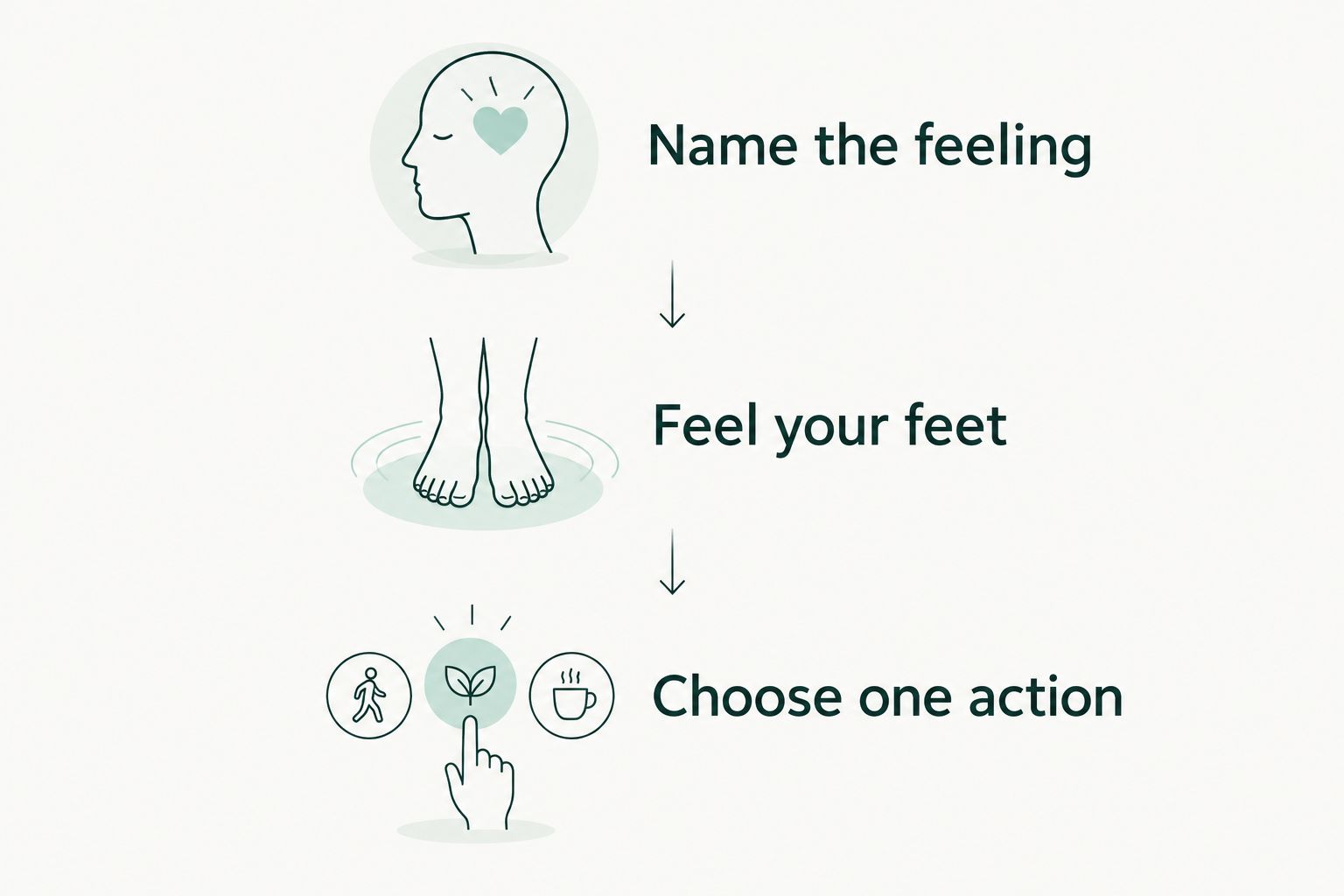
- Name the feeling: Silently identify what is happening, such as feeling rushed or frightened.
- Feel your feet: Notice contact with the floor while keeping your eyes open and attention available.
- Choose one action: Identify the next safe task or the person you need to call.
Grounding pros:
- Requires no equipment.
- Gives you a concrete focus.
- Can end with a help-seeking decision.
Grounding cons:
- Some people find inward attention uncomfortable.
- It cannot correct an unsafe situation.
Best for: A stressful moment when a brief pause is safe.
Verdict: Buy in—practice outside a crisis before deciding whether it suits you.
3. Reflective writing: best for learning without replaying everything
Brief reflective writing separates what happened from what you conclude about yourself. The aim is a useful learning note, not a detailed reconstruction of every uncomfortable moment.
Try a 5-minute writing limit as a personal boundary. Write about what you observed, what you need to clarify, and the action you will take. Avoid patient names, identifying details, or copying information from records into personal notes.
A useful entry ends with something concrete: request a supervised practice opportunity, clarify a procedure, or prepare a question for your preceptor. If writing becomes repeated self-criticism, stop and choose conversation or another form of support.
Reflective writing pros:
- Separates events from interpretations.
- Produces questions for supervision.
- Lets you reflect privately.
Reflective writing cons:
- Can turn into rumination.
- Personal notes create confidentiality risks if they contain patient information.
Best for: Nurses who process experiences more comfortably in writing.
Verdict: Buy in—keep the note brief, private, and action-focused.
4. Recovery boundaries: best for protecting life outside nursing
Recovery boundaries identify what you want to protect outside work and where you have discretion. Examples include declining optional commitments, setting expectations about personal messages, or keeping some time free from nursing-related study.
Start with a boundary you can actually control. Separate required workplace communication from optional checking, and confirm expectations rather than assuming you must remain reachable constantly.
Your relationships deserve space, too. If dating is competing with recovery time, How to Balance Dating as a Busy Nurse addresses that specific part of life outside nursing; it is separate from workplace resilience support.
Recovery boundary pros:
- Makes your priorities explicit.
- Helps you distinguish requirements from habits.
- Includes relationships and interests beyond nursing.
Recovery boundary cons:
- You do not control every scheduling decision.
- Family or financial responsibilities can restrict your choices.
Best for: Nurses whose off-duty time keeps filling with additional demands.
Verdict: Buy in—protect a manageable boundary without blaming yourself for constraints.
5. Help-seeking scripts: best for speaking up under pressure
A help-seeking script is a sentence you prepare before you feel rushed or intimidated. Its purpose is to state what you need clearly, not to make you sound confident when you are uncertain.
Build your sentence around the task, your limit, and the request. For example, explain that you have not performed a task independently and need supervision before proceeding. These are suggested communication elements, not a substitute for your organization's required safety language.
Know who to contact if the first person is unavailable or the concern remains unresolved. Follow workplace escalation procedures; an urgent patient safety concern requires prompt action through the appropriate route.
Help-seeking script pros:
- Makes the request explicit.
- Connects uncertainty with an action.
- Can be practiced with your preceptor.
Help-seeking script cons:
- Wording cannot guarantee a supportive response.
- Scripts need adapting to local procedures.
Best for: New nurses who hesitate because they cannot find the words.
Verdict: Buy in—prepare the request and learn the escalation route.
6. Self-compassionate reframing: best for harsh self-talk
Self-compassionate reframing replaces a global judgment about your worth with a specific description of a problem. It does not mean minimizing errors or telling yourself that everything went well.
Describe the task you struggled with, acknowledge how you feel, and name the responsible next action. Difficulty with a skill calls for feedback and practice, not a verdict about your entire future as a nurse.
If an error or near miss occurred, complete the required reporting and follow-up. Private reframing is not a substitute for accountability.
Self-compassionate reframing pros:
- Keeps criticism tied to a specific situation.
- Leaves room for learning.
- Pairs kindness with responsibility.
Self-compassionate reframing cons:
- Reassuring statements can feel forced.
- It cannot replace assessment of a genuine skills gap.
Best for: Nurses who turn a difficult task into a judgment about their identity.
Verdict: Buy in—describe the problem accurately, then choose a corrective step.
7. A post-shift transition: best for marking the end of work
A post-shift transition is a deliberate signal that work has ended. Choose an ordinary action that fits your circumstances: changing clothes, washing up, taking a quiet walk, or sitting briefly without work-related reading.
Keep the routine flexible. If you remember an unresolved safety concern, use the appropriate workplace contact process rather than trying to dismiss it as overthinking. If distress keeps returning, seek support instead of repeatedly expanding the routine.
Post-shift transition pros:
- Gives the workday a clear ending.
- Can use actions already in your routine.
- Does not require another learning task.
Post-shift transition cons:
- Home responsibilities can interrupt it.
- A ritual cannot guarantee rest or relief.
Best for: Nurses who want a clearer boundary between work and home.
Verdict: Buy in—choose something simple enough for an ordinary difficult day.
How the techniques are ranked
Peer check-ins take the default position because they connect reflection with another person's support. Grounding addresses the immediate moment; the remaining techniques serve distinct learning, communication, and recovery needs.
The ranking follows the criteria above: purpose, simplicity, safe timing, actionable outcomes, limits, and personal fit. Pdfcanopy's practical-advice format is a reading option, not evidence that a technique will produce a particular outcome.
Which resilience technique should you choose?
Start with a structured peer check-in and a clear help-seeking script. Know whom you can approach and how to explain what you need. Add a solo technique only if it serves a specific purpose.
For 2026, choose a manageable combination rather than making resilience another demanding project. If you already journal but still lack supervision, another notebook exercise is not the missing support.
When distress persists, disrupts sleep or daily functioning, or makes you concerned about practicing safely, contact an appropriate healthcare professional or workplace support service. Immediate danger requires urgent assistance, not a self-help routine.
FAQ
What's the best resilience-building technique for a new nurse?
Structured peer check-ins are the default recommendation here because they connect a difficult experience with support and a specific next step. Choose a trusted colleague, preceptor, or mentor, and follow confidentiality rules.
How do I calm down during a stressful nursing shift?
If it is safe to pause, try naming the feeling, noticing your feet on the floor, and choosing the next safe action. If patient care requires immediate help, seek assistance rather than delaying for an exercise.
Is reflective writing better than talking to someone?
Reflective writing suits private processing, while conversation gives you another person's input. Choose conversation when you need clarification, supervision, or help deciding what to do.
How long should a resilience exercise take?
Use a manageable time boundary rather than treating duration as a performance target. The suggested pauses and writing limits in this guide are starting points, not prescribed treatment doses.
Can resilience techniques fix nurse burnout?
Personal coping techniques cannot correct unsafe staffing, inadequate supervision, or workplace mistreatment. Seek appropriate workplace and professional support rather than treating every problem as an individual resilience failure.
When should a new nurse seek professional support?
Seek professional support when distress persists, interferes with daily functioning, or raises concerns about safe practice. Use urgent assistance if you or someone else is in immediate danger.
One last thing
Your most useful resilience habit in 2026 might be a question: what support does this situation require? Sometimes the answer is rest; sometimes it is supervision, escalation, or professional care. Pdfcanopy's self-help guides belong beside those supports, never in their place.