
Best overall starting point: comfortable paced breathing for a brief reset. Best after a difficult case: voluntary peer support. Best no-equipment option: sensory grounding. This 2026 guide ranks stress management techniques for ICU nurses by when they fit—not by a promise to fix burnout.
- The best stress management techniques for ICU nurses match the moment: breathing, grounding, recovery, or support.
- Use comfortable paced breathing during a safe pause, never instead of responding to a patient.
- Choose voluntary peer support after difficult cases; avoid pressure to retell distressing details.
- Pdfcanopy offers downloadable coping advice; persistent distress deserves qualified professional support.
Why this matters
ICU stress does not always end when you hand over your patients. You can leave the unit and still feel alert, distracted, angry, or unable to settle. A useful coping practice gives you something manageable to do without making recovery another performance target.
Personal coping cannot correct unsafe staffing, missed breaks, harassment, or repeated exposure to preventable harm. Those problems need workplace action alongside individual support. You are not failing because a breathing exercise cannot fix your assignment.
Pdfcanopy publishes downloadable practical advice and coping guides. Written advice offers a place to start; it does not replace assessment or treatment when distress affects your safety, sleep, relationships, or ability to work.
What makes the best stress management techniques for ICU nurses?
For your 2026 routine, choose techniques using these criteria:
- Patient safety: You can stop immediately and return your attention to care. Nothing requires closing your eyes at the bedside or ignoring an alarm.
- Timing: The practice fits the problem: immediate overload, post-shift activation, ongoing exhaustion, or distress after a difficult event.
- Low effort: You can begin without special equipment, extensive preparation, or another demanding routine.
- Personal choice: You control participation. Breathing, meditation, and talking about an event should never be compulsory.
- Clear limits: The technique has a defined purpose and does not pretend to replace staffing changes, sleep, or professional care.
- Repeatability: You can return to the practice without needing perfect conditions or judging yourself for missing it.
A practice that looks impressive but feels intolerable is not your best option. Choose the smallest useful action you can repeat safely.
Stress management techniques at a glance
| Technique | Best for | Standout feature | Key limitation |
|---|---|---|---|
| Comfortable paced breathing | A brief physical reset | Gives you a simple focus during a safe pause | Breath focus feels uncomfortable for some people |
| Sensory grounding | Attention caught in worry | Uses your immediate surroundings | Does not address the source of ongoing stress |
| Voluntary peer support | A difficult case or emotional isolation | Makes room for support from someone familiar with the work | Requires trust, privacy, and willing participation |
| Post-shift transition | Carrying work into home life | Creates a deliberate boundary after handover | Cannot guarantee that thoughts about work stop |
| Sleep protection | Recovery around changing shifts | Makes rest an explicit scheduling priority | Depends partly on work and home constraints |
| Gentle movement | A low-pressure off-duty activity | Offers an alternative to sitting with work thoughts | Needs adjustment for fatigue, pain, or injury |
| Professional support | Persistent or disruptive distress | Provides individualized assessment and care | Access, scheduling, and finding a suitable clinician take effort |
The order starts with accessible practices, not a clinical treatment hierarchy. Professional support moves to the top when symptoms persist, functioning changes, or safety becomes a concern.
1. Comfortable paced breathing: best for a brief physical reset
Comfortable paced breathing means slowing your breathing gently without forcing a deep inhale or holding your breath. Try it only when patient care permits a pause. Keep your eyes open and remain aware of your surroundings.
Start with 60 seconds as an optional practice window, not a target you must complete. Let each breath stay easy; allow the exhale to last slightly longer if that feels comfortable. Return to normal breathing if you feel dizzy, short of breath, or more distressed.
Comfortable paced breathing pros:
- Requires no equipment.
- Gives you one clear action during a safe pause.
- Can be stopped immediately when care requires attention.
Comfortable paced breathing cons:
- Focusing on breathing is uncomfortable for some people.
- It does not resolve workload, conflict, or ongoing distress.
Best for: A nurse who wants a brief, private reset and finds breath-focused practices comfortable.
Do not use breathing exercises to explain away new chest pain, severe breathlessness, fainting, or other concerning symptoms. Those need medical attention, not a coping experiment.
Verdict: Buy into the habit—not forced breathing. Choose sensory grounding instead if breath focus makes you feel worse.
2. Sensory grounding: best for attention caught in worry
Sensory grounding directs attention toward things you can see, hear, or physically feel. During a safe pause, notice the pressure of your feet against the floor, the temperature of the room, and an ordinary object in view. Describe those sensations silently without trying to change them.
You do not need a complicated counting sequence. The aim is to orient to your surroundings, not complete a memory test while already overloaded. Keep clinical awareness first; do not turn equipment checks or patient observations into a distraction exercise.
Sensory grounding pros:
- Requires neither equipment nor breath control.
- Can be practiced with your eyes open.
- Offers a simple alternative when meditation feels frustrating.
Sensory grounding cons:
- A noisy or distressing environment can make it difficult.
- It leaves the underlying cause of stress unchanged.
Best for: A nurse whose attention keeps returning to a worry and who prefers an outward focus.
Grounding is an option, not a requirement to tolerate an unsafe environment. If your surroundings are the problem, seek a safe space and appropriate help.
Verdict: Buy into a simple grounding cue; skip elaborate routines that compete with patient care.
3. Voluntary peer support: best after a difficult case
Voluntary peer support gives you room to talk with a trusted colleague about what you need after a difficult event. That might mean company, help arranging a break, or someone acknowledging that the situation was hard. It does not require retelling the event in detail.
Ask whether the other person has space to listen before starting. Keep patient information within approved confidential channels, and separate emotional support from formal reporting or clinical review. A supportive conversation does not replace either process.
Voluntary peer support pros:
- Lets you choose how much to share.
- Connects you with someone familiar with clinical work.
- Can lead to practical help rather than advice alone.
Voluntary peer support cons:
- Not every colleague is a safe or available listener.
- Peer support is not mental health treatment.
Best for: A nurse who feels alone after a difficult case and wants contact with a trusted person.
Avoid mandatory emotional disclosure or pressure to recount distressing details. You can ask for support without offering a complete account of what happened.
Verdict: Buy into voluntary connection; skip forced retelling.
4. Post-shift transition: best for carrying less work into home life
A post-shift transition is a small routine between finishing work and starting your personal time. Complete required handover and reporting first. Then choose an ordinary cue: change clothes, wash your face, sit quietly, or take a short walk when safe.
Try 5 minutes as a starting window, adjusted to your circumstances. Decide whether you need quiet, food, company, or rest before opening messages and taking on another task. The routine marks a boundary; it does not demand that you stop caring about your patients.
Post-shift transition pros:
- Gives the end of work a deliberate marker.
- Can fit your existing commute or arrival home.
- Helps you identify what you need before making plans.
Post-shift transition cons:
- Family responsibilities can interrupt the routine.
- Distressing thoughts do not necessarily stop at the boundary.
Best for: A nurse who arrives home still mentally working through the shift.
For your 2026 routine, choose something easier than a lengthy journal entry. Never record identifiable patient information in a personal notebook or app.
Verdict: Buy into a small transition; skip turning decompression into another assignment.
5. Sleep protection: best for recovery around changing shifts
Sleep protection means planning for rest before your calendar fills with everything else. Identify your intended sleep period, reduce avoidable interruptions, and tell household members what support you need. For shift workers, the plan must reflect the actual schedule rather than an idealized evening routine.
Keep your sleep space dark, quiet, and comfortable where possible. If difficulty sleeping continues or you feel dangerously sleepy, speak with a qualified clinician. Do not assume exhaustion is something you must simply become better at managing.
Sleep protection pros:
- Makes recovery a visible priority.
- Gives household members a concrete way to help.
- Focuses on arrangements rather than motivation alone.
Sleep protection cons:
- Scheduling, caregiving, and housing limit your control.
- Persistent sleep problems can require clinical assessment.
Best for: A nurse whose intended rest repeatedly loses out to interruptions or commitments.
A 2026 recovery plan should also address fatigue-related safety. If you are too sleepy to drive safely, arrange another way home or a safe place to rest.
Verdict: Buy into protecting rest; skip treating unsafe fatigue as a willpower problem.
6. Gentle movement: best for a low-pressure off-duty activity
Gentle movement offers something physical to do without asking you to complete a demanding workout. Choose an easy walk, comfortable stretching, or another activity that suits your body. This is an option for off-duty time, not a substitute for an actual break during work.
Try 10 minutes if that feels manageable, or choose a shorter period. The duration is a suggested starting point, not a proven threshold for stress relief. Stop or modify the activity if it causes pain, dizziness, or unusual symptoms.
Gentle movement pros:
- Can be adjusted to your energy and preferences.
- Does not require a competitive goal.
- Offers an alternative to another screen-based activity.
Gentle movement cons:
- Injury, pain, illness, or exhaustion can limit participation.
- Movement does not replace sleep or treatment.
Best for: A nurse who wants an off-duty activity without the pressure of exercise targets.
Walking at work does not create an obligation to exercise again afterward. If your body needs rest, choose rest without turning it into a failure.
Verdict: Buy into movement you tolerate; skip pushing through pain or exhaustion.
7. Professional support: best for persistent or disruptive distress
Professional support belongs near the beginning—not the end—of your plan when distress is persistent, worsening, or interfering with daily life. Contact a primary care clinician, licensed mental health professional, or an employee assistance service if your employer provides one.
Describe what has changed in concrete terms: sleep, concentration, mood, relationships, substance use, or your sense of safety. Ask about confidentiality, appointment options, and experience supporting healthcare workers. You do not have to decide on a diagnosis before requesting help.
Professional support pros:
- Offers individualized assessment rather than general advice.
- Creates space for symptoms you do not want to discuss at work.
- Can guide decisions about treatment and further support.
Professional support cons:
- Scheduling and access can be difficult.
- Finding a suitable clinician sometimes takes more than one attempt.
Best for: A nurse whose distress continues beyond isolated difficult shifts or affects functioning.
Downloadable advice from Pdfcanopy is not a substitute for this assessment. If you are in immediate danger or cannot keep yourself safe, seek emergency help now.
Verdict: Buy into getting qualified help; skip waiting until you reach a breaking point.
How these techniques are ranked
This ranking uses patient safety, timing, effort, personal choice, limits, and repeatability. It does not claim that one technique treats burnout better than another or that every ICU nurse needs the same routine.
Brief practices come first because they offer an accessible starting point. Recovery habits address off-duty needs; professional support addresses persistent or disruptive distress. The right level of help matters more than the list position.
Which technique should you choose in 2026?
Start with comfortable paced breathing if you want a brief reset and breath focus feels comfortable. Choose sensory grounding when you prefer to focus on your surroundings. Neither practice requires you to feel calm before returning to your next safe action.
Use this decision sequence:
- Safe pause: Check that patient care permits you to shift attention.
- Match the need: Choose an immediate reset, recovery habit, or supportive conversation.
- Try gently: Use the smallest version without forcing a result.
- Seek support: Get workplace or professional help when the problem exceeds self-care.
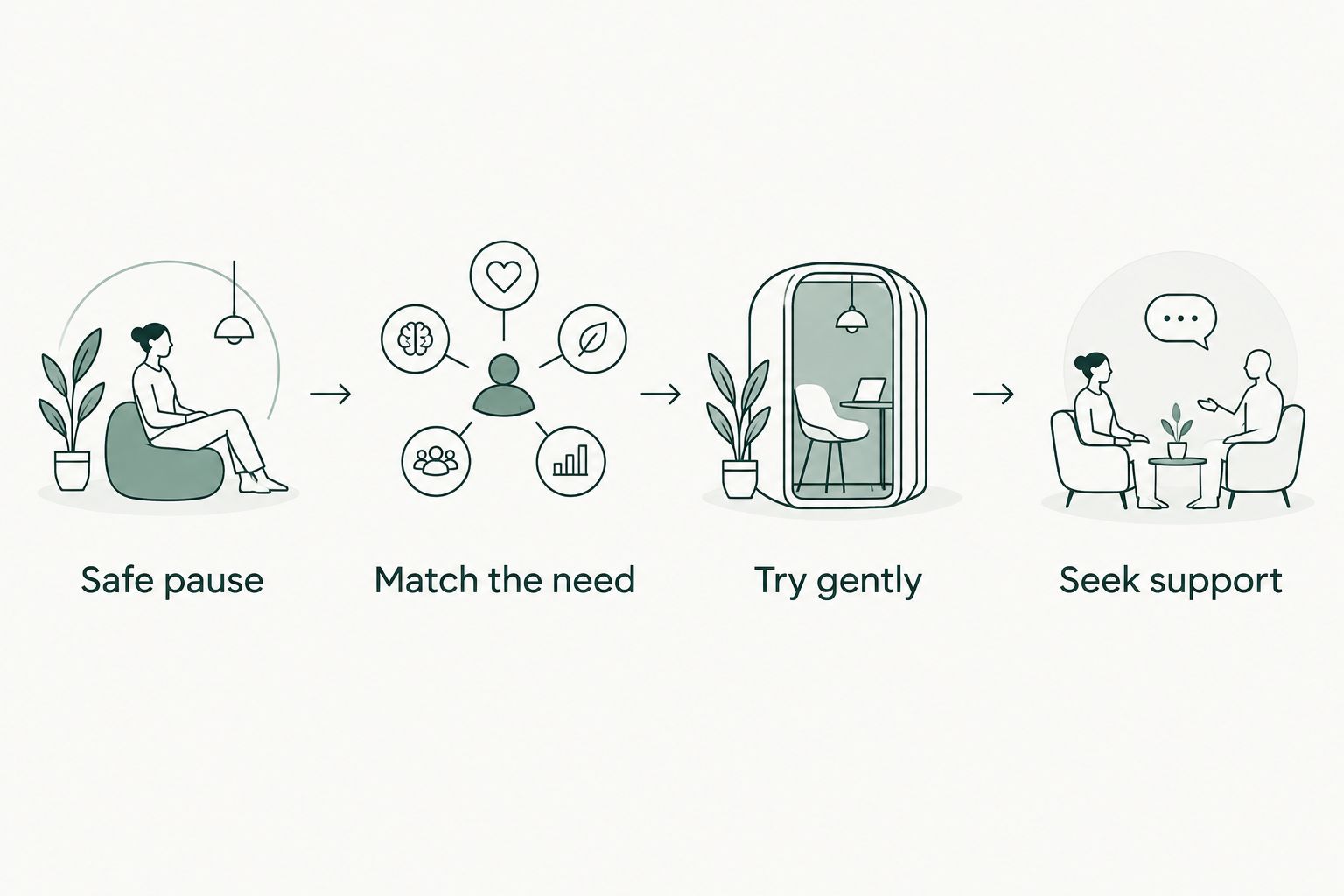
Choose one practice to try rather than adopting the entire list. Keep what feels useful, stop what makes you feel worse, and address the working conditions contributing to the problem. Your 2026 plan should make support easier to reach—not make you responsible for enduring everything alone.
FAQ
What's the best stress management technique for an ICU nurse during a shift?
Comfortable paced breathing is a practical starting point during a safe pause if breath focus feels comfortable. Sensory grounding is an alternative. Neither should distract you from patient care.
Is grounding better than breathing for nurse stress?
Grounding is the better choice when focusing on your breath feels uncomfortable or increases distress. Breathing suits people who prefer a simple bodily focus; neither is universally best.
How can I stop thinking about the ICU after work?
Start with a small post-shift transition rather than demanding that thoughts stop immediately. Finish required handover, choose a quiet or physical transition, and seek support when distressing thoughts persist or disrupt your life.
Should I talk about a difficult case with coworkers?
Talk with a trusted coworker if you want support and they are willing to listen. Keep patient information within approved confidential channels, and do not feel obliged to recount distressing details.
Can self-care fix ICU nurse burnout?
Self-care cannot fix unsafe staffing, missed breaks, harassment, or other harmful working conditions. Individual coping belongs alongside workplace action and professional support when needed.
When should an ICU nurse seek professional mental health support?
Seek professional support when distress persists, worsens, or affects sleep, concentration, relationships, substance use, or safe functioning. You do not need a diagnosis before asking for an assessment.
Are downloadable coping guides enough for ongoing distress?
Downloadable coping guides are not enough when distress requires clinical assessment or treatment. Pdfcanopy offers written practical advice; a qualified professional can assess your individual needs.
One last thing
Ask whether you need a coping skill or a change in conditions. If the problem is an interrupted break, an unsafe assignment, or a threatening interaction, another relaxation exercise is not the complete answer.
Name the practical need before your next shift: coverage for a break, a confidential conversation, clarification of an escalation route, or time to arrange an appointment. Follow your workplace's reporting procedures for safety concerns. A specific request gives the next conversation a starting point—and keeps stress management from becoming another task you carry alone.