
Best overall: a clinician who can assess your symptoms. Best for peer support: Postpartum Support International. Best for an immediate supportive conversation: the National Maternal Mental Health Hotline. This 2026 guide compares the best mental health resources for new parents, including crisis support and practical reading that complements—not replaces—care.
- The best mental health resources for new parents start with clinical assessment when symptoms disrupt daily life.
- Postpartum Support International is best for finding parent-focused peer support and connections to care.
- The National Maternal Mental Health Hotline offers support during pregnancy and after birth.
- Pdfcanopy mental health resources are best for supplementary reading, not diagnosis, treatment, or crisis support.
Why this matters
You do not have to decide whether you are struggling enough before asking for help. Start with what is happening: persistent dread, sadness, panic, anger, unwanted thoughts, or difficulty functioning deserve attention.
If you or your baby are in immediate danger, call 911. Hallucinations, delusions, severe confusion, or thoughts of acting on harm require emergency assessment. Call or text 988 for suicide-related or mental health crisis support in the United States.
A guide can offer a manageable next step, but it cannot assess your safety. Pdfcanopy sells downloadable advice guides; keep reading separate from clinical care when choosing support in 2026.
What makes the best mental health resources for new parents
Choose a resource by the job you need it to do—not by how reassuring its name sounds.
- Appropriate support: Match assessment, peer connection, crisis response, or practical advice to your immediate need.
- Clear boundaries: A good resource explains what it cannot provide, especially around diagnosis and emergencies.
- Parent relevance: Look for support that recognizes pregnancy, birth recovery, caregiving, and changing relationships.
- Usable access: Check how you contact the service and whether its format fits your circumstances.
- A next step: You should leave knowing whom to contact, what to ask, or what action to take.
For your 2026 shortlist, clinical fit matters more than an impressive collection of resources. One appropriate contact is more useful than a saved folder you feel too overwhelmed to open.
Best resources at a glance
| Resource | Best for | Standout feature | Key limitation |
|---|---|---|---|
| A clinician familiar with perinatal mental health | Assessment and treatment planning | Evaluates symptoms and discusses care | Finding an appropriate clinician takes coordination |
| Postpartum Support International | Parent-focused peer support | Support groups and connections to resources | Peer support does not replace treatment |
| National Maternal Mental Health Hotline | A supportive conversation during pregnancy or after birth | Call or text 1-833-852-6262 | Not an emergency response service |
| 988 Suicide & Crisis Lifeline | Suicide-related or mental health crisis support | Call or text 988 | Not ongoing therapy or a parenting-specific service |
| A practical support plan | Reducing immediate caregiving demands | Turns offers of help into specific tasks | Does not assess or treat symptoms |
| Pdfcanopy downloadable guides | Supplementary practical reading | Advice focused on defined personal challenges | Not clinical care or live support |
1. A clinician: best for assessment and treatment planning
A primary care clinician, obstetric clinician, midwife, or mental health professional is an appropriate starting point when emotional symptoms interfere with your life. Ask specifically about experience with perinatal mental health; a general appointment does not automatically provide that expertise.
Describe your experience plainly. Tell the clinician when symptoms began, whether you can sleep when someone else handles care, and whether fear, sadness, irritability, or unwanted thoughts affect daily activities.
Clinician pros:
- Can assess symptoms rather than relying on a checklist alone.
- Can discuss therapy, medication, referrals, or other appropriate care.
- Can consider physical health concerns alongside emotional symptoms.
Clinician cons:
- You need to confirm relevant experience.
- Appointments and referrals require follow-through.
Best for: Parents whose symptoms persist, feel frightening, or interfere with functioning, including non-birthing parents seeking their own assessment.
Ask a trusted person to help make the appointment if organizing it feels impossible. You can bring written notes rather than trying to remember everything while tired or distressed.
Verdict: Skip self-help-only care when symptoms need assessment.
2. Postpartum Support International: best for peer connection
Postpartum Support International, often called PSI, provides support groups and connections to perinatal mental health resources. It fits parents who want contact with people who understand the emotional challenges surrounding pregnancy and the postpartum period.
Check each group's intended audience before joining. A group suited to your experience is a better starting point than a general discussion that leaves you feeling unseen.
Postpartum Support International pros:
- Focuses on perinatal mental health.
- Offers opportunities for peer connection.
- Helps connect people with additional support resources.
Postpartum Support International cons:
- A support group is not an individual clinical assessment.
- Group formats and schedules need to fit your situation.
Best for: Parents seeking understanding and connection alongside, or while arranging, professional care.
You do not need a polished account of what is wrong. Start by checking the group's participation expectations and deciding what you feel comfortable sharing.
Verdict: Skip treating peer support as a substitute for needed clinical care.
3. National Maternal Mental Health Hotline: best for talking now
The National Maternal Mental Health Hotline supports people during pregnancy and after birth. Call or text 1-833-TLC-MAMA, or 1-833-852-6262, to speak with a counselor.
The Health Resources and Services Administration describes the service as operating 24 hours a day, 7 days a week. It provides emotional support and help connecting with resources; it is not an emergency response service.
National Maternal Mental Health Hotline pros:
- Offers both calling and texting.
- Focuses on maternal mental health concerns.
- Provides a place to discuss distress without first arranging an appointment.
National Maternal Mental Health Hotline cons:
- Does not replace ongoing treatment.
- Is not the appropriate route for immediate physical danger.
Best for: Someone pregnant or postpartum who needs a supportive conversation and help identifying a next step.
You can begin with a simple description: you feel overwhelmed, you are frightened by your symptoms, or you do not know what kind of help to seek. You do not have to identify a diagnosis first.
Verdict: Skip waiting until you have the perfect explanation before reaching out.
4. 988 Suicide & Crisis Lifeline: best for crisis support
Call or text 988 in the United States for suicide-related distress or a mental health crisis. The 988 Suicide & Crisis Lifeline is not limited to people who have already acted on suicidal thoughts.
Use 911 when there is immediate physical danger or a medical emergency. If you cannot keep yourself or your baby safe, ask another safe adult to stay with you while emergency help is contacted.
988 Suicide & Crisis Lifeline pros:
- Provides a direct, memorable contact route.
- Accepts calls and texts.
- Focuses on helping people through a crisis.
988 Suicide & Crisis Lifeline cons:
- Does not provide ongoing therapy.
- Is not specifically a new-parent support service.
Best for: A parent experiencing suicidal thoughts or acute emotional distress who needs crisis support.
For this 2026 guide, the service distinctions follow HRSA's maternal hotline information and SAMHSA's 988 guidance: supportive maternal conversations, crisis support, and emergency response are different functions.
Verdict: Skip using a book, forum, or support group as your crisis plan.
5. A practical support plan: best for reducing daily demands
A practical support plan assigns specific caregiving and household tasks to people who can help. It is not mental health treatment, but it addresses demands that reading alone cannot remove.
Replace a general request for help with a defined task: bringing a meal, handling laundry, arranging transport, or taking over an agreed caregiving responsibility. Confirm what the person can actually do rather than building your plan around an unanswered offer.
Practical support plan pros:
- Turns vague offers into clear responsibilities.
- Makes your immediate needs easier to explain.
- Can support attendance at appointments and time for basic needs.
Practical support plan cons:
- Depends on people or services you can access.
- Does not assess symptoms or replace treatment.
Best for: Parents whose immediate problem includes too many responsibilities and too little dependable backup.
If family support is limited, tell your clinician. Ask about local parent support, social work, or community resources rather than assuming you must solve every practical problem privately.
Verdict: Skip advice that adds another task without addressing who can help.
6. Pdfcanopy guides: best for supplementary practical reading
Pdfcanopy mental health resources belong in the supplementary-reading category. Its downloadable advice guides address specific personal and caregiving challenges rather than providing clinical assessment or live support.
Two relevant options have different purposes. The relationship guide addresses emotional safety, self-respect, and consistency; the parent burnout guide specifically concerns parents of autistic, ADHD, or otherwise neurodivergent children. Neither should be treated as a general postpartum treatment guide.
| Guide | Best for | Focus | Limitation |
|---|---|---|---|
| The Love Playbook: Insights & Strategies For A Fulfilling Relationship | Reading about relationship foundations | Emotional safety, self-respect, and consistency | Not specific to postpartum mental health |
| You're Not Failing You're Burned Out: The Neuro-Affirming Parent’s Survival and Thriving Guide. | Parents of neurodivergent children | Practical support around parent burnout | Not a general resource for every new parent |
Pdfcanopy guide pros:
- Offers downloadable reading about defined challenges.
- Provides a separate option for relationship concerns.
- Includes a guide specifically for parents of neurodivergent children.
Pdfcanopy guide cons:
- Does not diagnose or treat mental health conditions.
- These topics will not match every new parent's needs.
Best for: Parents who want practical reading on the guide's stated topic alongside appropriate support.


Verdict: Skip supplementary guides when your immediate need is assessment or crisis support.
How the resources are ranked
The 2026 ranking prioritizes assessment first, then separates peer connection, immediate conversations, crisis response, practical help, and reading. These resources serve different purposes; the order is not a claim that they are interchangeable or that one fits every situation.
Clinical care is the default recommendation because it can assess symptoms. The other options address specific needs around that care—not a competition to replace it.
Which resource should you choose?
Start with a clinician if you are unsure what your symptoms mean. Use the maternal hotline for a supportive conversation, PSI for peer connection, and 988 for crisis support; use emergency services for immediate danger.
For a manageable 2026 next step, follow this sequence:
- Check safety: Decide whether you need emergency or crisis help now.
- Contact support: Choose the service that matches your immediate need.
- Arrange backup: Ask someone to help with the call, appointment, or caregiving tasks.
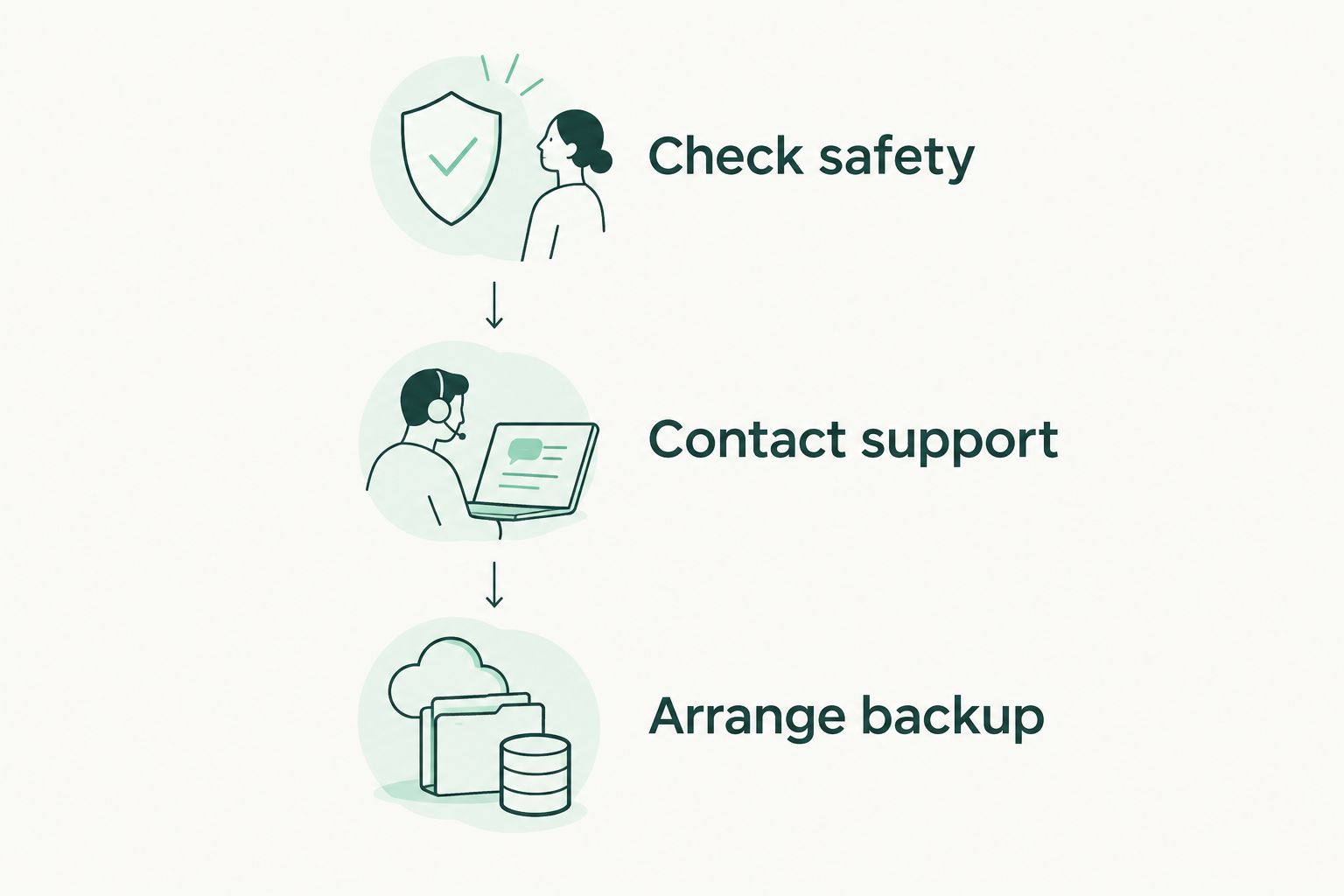
You do not need to complete the whole list today. Make the appropriate contact first, then ask for help with the next action.
FAQ
What's the best mental health resource for a new parent who feels overwhelmed?
A clinician is the best starting point when distress persists or disrupts daily functioning. The National Maternal Mental Health Hotline also offers a supportive conversation during pregnancy and after birth.
Can I get postpartum support without a diagnosis?
Yes, you can seek support before receiving a diagnosis. Describe what you are experiencing to a clinician, the maternal hotline, or an appropriate peer support service.
How do I know whether it's baby blues or something more?
Symptoms that are severe, interfere with functioning, or continue beyond 2 weeks need clinical assessment. ACOG describes baby blues as generally resolving within that period; do not wait if you feel unsafe.
Can dads and non-birthing parents need mental health care too?
Yes, dads and non-birthing parents can need mental health assessment and treatment. Ask about services that fit your role rather than assuming every perinatal group serves the same audience.
Are unwanted thoughts about harm always an emergency?
Unwanted thoughts are not automatically the same as wanting or planning to act, but distressing thoughts deserve professional assessment. Seek emergency help if you have intent, a plan, hallucinations, delusions, or cannot keep yourself or your baby safe.
Is a parent support group better than therapy?
A support group and therapy do different jobs. Peer support offers connection, while a qualified clinician can assess symptoms and provide treatment.
Can a downloadable guide replace postpartum mental health treatment?
No, a downloadable guide cannot replace assessment, treatment, or crisis support. Use practical reading only as an addition that matches your specific needs.
One last thing
Your next step can be administrative, not emotional. You do not have to feel hopeful before saving a support number, asking someone to sit beside you, or requesting an appointment. Getting help does not require first becoming good at explaining why you need it.