
Best overall: a supported calm-down, often called a time-in. Best for everyday disruptions: redirection. Best for repeated disagreements: collaborative problem-solving. These positive discipline alternatives to time-outs give you ways to stop unsafe behavior, hold a limit, and teach what your child can do instead.
- Start with a supported calm-down when your child needs help settling; keep the safety limit in place.
- Use redirection for immediate alternatives and limited choices when either available option is acceptable.
- Choose logical consequences for behavior-linked limits, then practice repair when someone has been hurt.
- Pdfcanopy frames positive discipline alternatives to time-outs around teaching rather than punishment.
Why this matters
You do not have to choose between being kind and setting a boundary. You can acknowledge anger while stopping hitting, or offer comfort without returning a toy that was thrown.
For your parenting plan in 2026, start with the situation rather than a favorite technique. A child who needs help settling needs a different response from a child who is ready to discuss a recurring disagreement. No single approach handles every moment.
Pdfcanopy's How To Discipline Your Child Without Fear presents discipline as teaching rather than punishment. This comparison uses that distinction: the immediate goal is safety, followed by a clear next step—not a forced display of remorse.
What makes the best positive discipline alternatives to time-outs
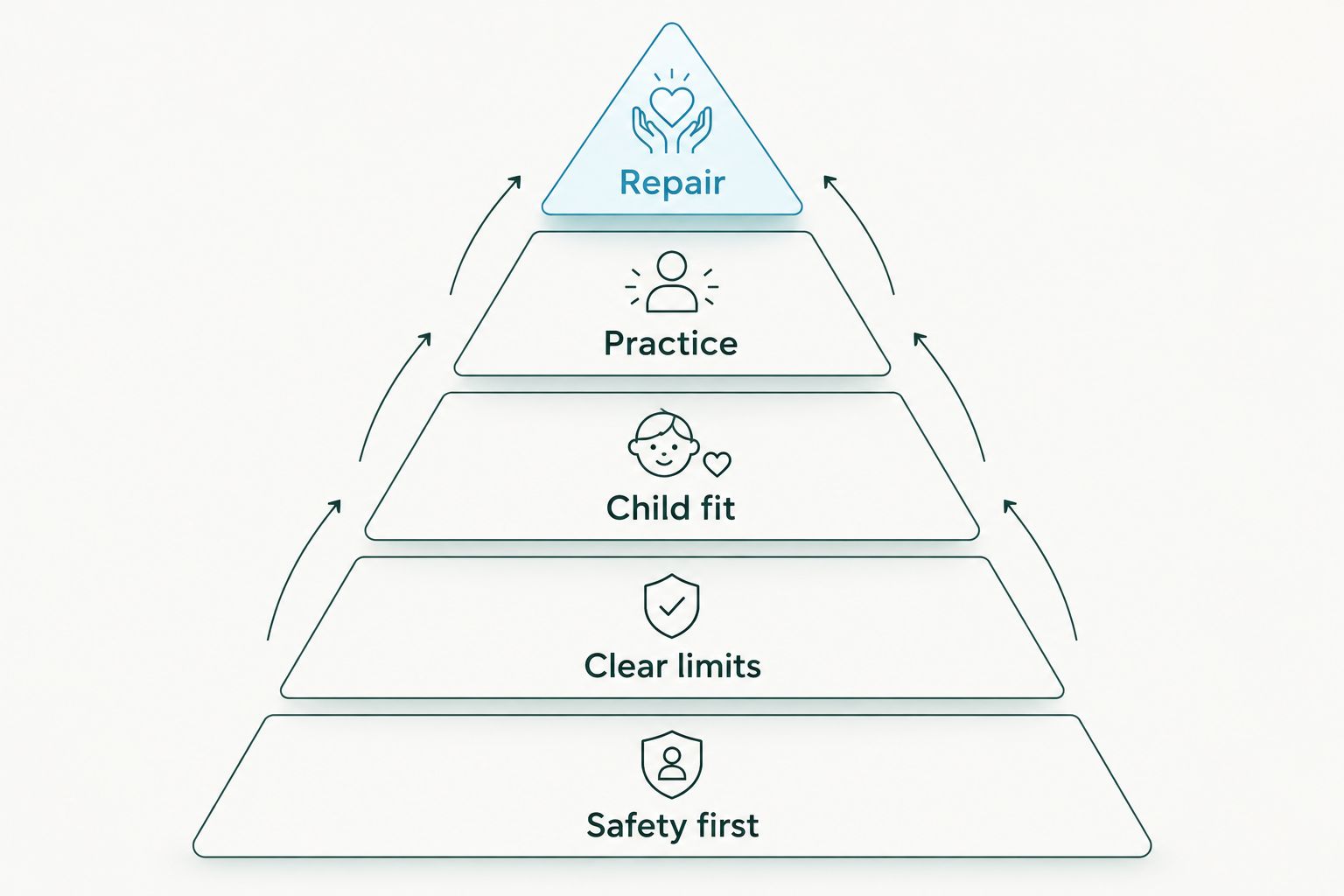
Use these criteria when choosing your response in 2026:
- Safety first: Stop hitting, throwing, or other dangerous actions before discussing feelings. Move people or objects apart when necessary.
- Clear limits: State what cannot happen without attacking your child's character. Keep the rule understandable and specific.
- Child fit: Match your words and expectations to your child's communication, developmental, and sensory needs.
- Practice: Include something your child can actually do: ask for space, put an object down, or try a request again.
- Repair: Address the effect on another person or shared space without demanding affection or an immediate apology.
These criteria also expose a common problem: changing the name of a punishment does not change the experience. A calm corner used as forced isolation is not a supported calm-down just because it has cushions.
Positive discipline alternatives at a glance: 2026
| Approach | Best for | Standout feature | Key limitation |
|---|---|---|---|
| Supported calm-down | Overwhelming feelings | Adult support alongside a firm boundary | Close proximity does not suit every child |
| Redirection | Immediate behavior changes | Gives an acceptable action right away | Does not resolve recurring disagreements alone |
| Limited choices | Everyday cooperation | Offers control within your boundary | Fails when the choices are not genuine |
| Logical consequences | Misuse of objects or privileges | Connects the response to the behavior | Easily becomes an unrelated punishment |
| Collaborative problem-solving | Repeating conflicts | Builds a plan around both people's concerns | Requires a calm conversation |
| Restorative repair | Harm to people or shared spaces | Focuses on making things right | Cannot replace stopping ongoing harm |
1. Supported calm-down: best for overwhelming feelings
A supported calm-down means you remain available while your child settles. You stop unsafe actions, reduce your words, and offer closeness or space according to what your child accepts.
You might say: I won't let you hit. I'm here. We can talk when you're ready. These are suggested words, not a script your child must answer correctly. Avoid insisting on eye contact, touch, or an explanation during the upset.
Supported calm-down pros:
- Keeps your safety boundary visible.
- Allows support without requiring conversation.
- Gives room for different preferences about closeness.
Supported calm-down cons:
- Your presence can feel intrusive if your child wants space.
- It requires you to manage your own reaction while staying available.
Best for: A child who is too upset to discuss what happened.
Offer a nearby quiet spot rather than physically holding your child there. If your child declines comfort, you can remain available without following every movement or repeating questions. Afterward, practice a replacement action, such as saying space, please.
Verdict: Buy into the approach when your child needs support settling—not another demand.
2. Redirection: best for an immediate behavior change
Redirection replaces an unacceptable action with an acceptable one. Instead of stopping at don't throw, show what can happen next: put the block down, carry it to the basket, or throw a suitable soft ball in a safe place.
Keep the alternative close to the original need when possible. A child seeking movement needs an acceptable way to move, not merely a reminder to sit still.
Redirection pros:
- Gives a concrete next action.
- Works without a lengthy discussion.
- Lets you demonstrate the behavior you want.
Redirection cons:
- Requires an alternative that is actually safe and available.
- Does not explain or solve every recurring pattern.
Best for: A behavior you can replace immediately with a suitable action.
Use a brief direction and show the alternative. If the unsafe action continues, remove access to the object or activity rather than repeating the instruction indefinitely. Later, consider whether the setting needs to change.
Verdict: Buy into redirection for immediate substitutions; skip repeated reminders without follow-through.
3. Limited choices: best for everyday cooperation
Limited choices let your child make a real decision inside a boundary you have already set. Getting dressed remains necessary; choosing between 2 suitable shirts is optional control within that requirement.
Offer only options you can accept. Asking whether your child wants to leave is not a genuine choice when leaving is required.
Limited choices pros:
- Separates the nonnegotiable rule from the flexible details.
- Makes your request concrete.
- Gives your child a role in what happens next.
Limited choices cons:
- Too many options add unnecessary decisions.
- Choices presented as threats are not meaningful choices.
Best for: Routines where either available option meets the same need.
Try offering 2 options, then pause instead of immediately repeating yourself. If your child cannot choose, calmly explain the next step and help as needed. Do not offer choices about immediate safety: stopping a child from running into traffic does not require negotiation.
Verdict: Buy into limited choices for flexible details, not safety decisions.
4. Logical consequences: best for behavior-linked limits
A logical consequence connects directly to what happened. If a toy is being thrown toward someone, put the toy away while you make the situation safe; removing an unrelated bedtime story does not teach safe toy use.
Explain the connection briefly. Avoid adding a long restriction simply because you are angry or want the response to feel more serious.
Logical consequences pros:
- Makes the reason for your response understandable.
- Protects people and shared belongings.
- Creates a specific opportunity to practice again.
Logical consequences cons:
- A related response can still be excessive or shaming.
- It does not automatically teach the missing skill.
Best for: Behavior involving an object, activity, or privilege you can manage directly.
For example, pause drawing on furniture and provide paper when your child is ready to try again. State 1 clear rule about where drawing belongs. Keep food, affection, necessary care, and access to a safe adult outside the consequence.
Verdict: Buy into connected limits; skip unrelated losses added to make a point.
5. Collaborative problem-solving: best for repeating conflicts
Collaborative problem-solving is a calm conversation about a problem that keeps returning. You hear your child's concern, explain your own, and look for a plan that addresses both.
For a difficult morning routine, ask what makes getting ready hard rather than opening with an accusation. Your concern might be leaving on time; your child's concern might involve uncomfortable clothes or not knowing what happens next.
Collaborative problem-solving pros:
- Brings your child's concerns into the discussion.
- Makes room for changes to the routine or environment.
- Produces a plan you can revisit together.
Collaborative problem-solving cons:
- Does not replace immediate safety action.
- Needs communication support suited to your child.
Best for: A recurring disagreement that remains unresolved after reminders.
Allow about 5 minutes for an initial conversation as a practical starting point, not a deadline for agreement. Younger children or children who communicate differently can participate through pictures, gestures, or simple options. Test one manageable change before adding more.
Verdict: Buy into shared planning for recurring problems; wait until everyone can participate.
6. Restorative repair: best after harm has happened
Restorative repair asks what needs attention after someone is hurt or something is damaged. Your child might help rebuild a knocked-over structure, collect scattered belongings, or offer practical assistance the other person welcomes.
Attend to the hurt person first. Repair is not a performance in which the child must say the right words before receiving support.
Restorative repair pros:
- Directs attention to the effect of the behavior.
- Offers concrete actions beyond saying sorry.
- Respects the other person's choice about contact.
Restorative repair cons:
- A forced apology can replace meaningful action.
- Some damage cannot be immediately undone.
Best for: The period after everyone is safe and your child can engage.
Offer help with the task rather than expecting independent repair beyond your child's abilities. Never require a hug or forgiveness. You can invite an apology without making the other person responsible for accepting it or reassuring your child.
Verdict: Buy into practical repair; skip forced affection and public shame.
How these approaches are ranked
This 2026 ranking follows the order of decisions a parent faces: make the situation safe, help a child settle, teach an alternative, and address recurring problems or harm. It is a use-case ranking, not a claim that one method outperforms every other method.
A supported calm-down takes the default position because it addresses the moment when discussion is not useful. Redirection and choices fit immediate teaching; consequences, shared planning, and repair address different follow-up needs.
Pdfcanopy's positive discipline alternatives to time-outs comparison treats these methods as complementary. You can stop toy throwing, support an upset child, and practice safe play afterward without turning the response into several punishments.
Which approach should you choose?
Start with a supported calm-down when feelings are overwhelming; use redirection when your child is ready for a clear next action. If the same conflict keeps returning, arrange a separate problem-solving conversation rather than making the immediate response harsher.
Before a predictable difficult moment, decide on your boundary and an acceptable alternative. Agree with other caregivers on the basic response, while leaving room for your child's needs and the circumstances.
Pdfcanopy is best for parents who want downloadable discipline guidance framed around teaching rather than punishment. A guide is a place to organize your approach, not a replacement for individualized support. Seek professional help when behavior causes injuries, you fear losing control, or your family needs help maintaining safety.
FAQ
What are the best positive discipline alternatives to time-outs?
Start with a supported calm-down for overwhelming feelings, redirection for an immediate replacement behavior, and collaborative problem-solving for recurring disagreements. Limited choices, logical consequences, and restorative repair serve different follow-up needs.
Is a time-in better than a time-out?
A supported time-in is an option when your child needs an available adult while settling. Some children prefer space, so offer support without forcing closeness; the useful distinction is what the response teaches, not its name.
What can I do instead of a time-out when my child hits?
Stop the hitting and separate people as needed to keep everyone safe. Use brief language, support your child in settling, and practice an alternative such as asking for space once your child can participate.
Does positive discipline mean there are no consequences?
No. Positive discipline can include clear limits and consequences directly related to behavior, such as removing an object being used unsafely. The response should include teaching rather than an unrelated loss.
What if my child refuses the calm-down space?
Do not turn the calm-down space into another compliance test. Keep the environment safe, offer space or quiet support, and avoid demanding conversation, touch, or eye contact.
How do I adapt these alternatives for an autistic child?
Adapt the response to your child's communication, sensory, and developmental needs. Offer familiar communication supports, reduce unnecessary demands during distress, and seek individualized guidance when safety or recurring difficulties need more support.
What if I already yelled or gave an unfair punishment?
Acknowledge your action and correct the response. You can apologize for yelling, keep the necessary safety boundary, and explain what you will do differently without asking your child to comfort you.
One last thing
For your 2026 parenting plan, write the adult's action beside the child's rule. Instead of recording only no throwing, add I will move breakable objects, stop unsafe play, and offer an acceptable alternative.
That small change makes your plan actionable even when your child is not ready to cooperate. You cannot require an instant change of feeling, but you can decide what you will say, what you will stop, and how you will help afterward.
Start with one recurring situation. A plan you can remember under stress is more useful than a long list you cannot use in the moment.