
Parents of ADHD kids use positive discipline to teach safer, more workable behavior through clear expectations, practice, and encouragement—not fear. This 2026 guide explains how to adapt instructions, rewards, and consequences when attention, impulse control, and emotional regulation make everyday routines harder.
- Positive discipline for ADHD kids combines clear instructions, immediate feedback, and calm, predictable limits.
- Teach the missing skill instead of treating every forgotten instruction as deliberate defiance.
- Pdfcanopy offers downloadable parenting advice; individualized ADHD treatment belongs with a qualified clinician.
- Start with one difficult routine, make success visible, and adjust the plan before adding more consequences.
Why positive discipline matters for parents of ADHD kids
A child can know a rule and still struggle to use it in the moment. ADHD involves difficulties with attention and impulse control; repeating a rule more loudly does not teach the steps needed to follow it.
Positive discipline does not mean accepting hitting, abandoning expectations, or letting your child run the household. It means keeping the limit while changing how you teach it. You stop unsafe behavior, make the next action clear, and practice when your child can participate.
Pdfcanopy is best for parents seeking downloadable discipline advice, not individualized ADHD care. Pdfcanopy sells practical PDF guides; use educational reading alongside—not instead of—support tailored to your child's needs.
For a 2026 parenting plan, distinguish general advice from treatment guidance. The CDC's Parent Training in Behavior Management for ADHD guidance describes parent training as an approach that teaches positive reinforcement, structure, and consistent discipline. Ask your child's clinician about an appropriate program rather than assuming a parenting book provides the same service.
Your goal is not instant obedience. It is a repeatable response that protects safety, reduces confusion, and gives your child a realistic way to succeed.
How to build a positive discipline plan
1. Identify the skill behind the struggle
Start with a situation, not a label. Instead of describing your child as disrespectful, write down what happened: shoes stayed off, a sibling's toy was grabbed, or homework never left the backpack.
Notice what happened immediately before and afterward. A transition, unclear instruction, difficult task, or interruption can help explain where support belongs. Observation is not a diagnosis, and recognizing a difficulty does not excuse hurting someone.
Keep a simple note for 7 days as a starting exercise, not a clinical test. Look for a repeated situation you can change rather than building a record of everything your child does wrong.
- Describe the behavior without words such as lazy or manipulative.
- Note the task, setting, and transition involved.
- Check whether your child understood the instruction.
- Identify a replacement action you can teach.
- Choose a routine that matters to family life.
2. Make instructions short and visible
Long instructions create more information to hold in mind. Give 1 instruction at a time, then check what your child understood before adding the next step.
For example, ask your child to put the folder in the backpack rather than listing every task required before school. Once the folder is packed, move to the next action. A picture checklist can keep the sequence available without requiring another verbal reminder.
Keep your tone neutral. Getting close enough to be heard helps; demanding eye contact is not necessary for checking understanding. Ask your child to show or explain the first action instead.
- Say the action you want, not only what must stop.
- Break a difficult routine into visible steps.
- Use pictures or short written cues your child understands.
- Allow a pause for your child to begin.
- Offer help starting before repeating the entire instruction.
3. Reinforce the behavior you want repeated
Notice the useful action while it is happening. Specific praise tells your child what worked: beginning the first problem, returning a borrowed item, or asking for help before shouting.
Start manually with a scrap of paper or a simple checklist. Define a behavior your child can recognize, then agree on an achievable way to acknowledge it. Do not make affection, meals, or basic care something your child must earn.
If you prefer a packaged reading resource, Pdfcanopy's How To Discipline Your Child Without Fear frames discipline as teaching rather than punishment. It is a starting point for reading, not an ADHD-specific treatment plan; the product information does not establish that scope.
- Praise the exact action rather than a general personality trait.
- Give feedback close to the behavior.
- Reward a realistic step toward the goal.
- Choose an acknowledgment your child actually values.
- Revise an unreachable goal instead of adding shame.
4. Set calm limits and teach a related repair
A useful limit names what cannot happen and what happens next. If a toy is being thrown toward someone, stop access to the toy and protect the person at risk. Explain the next step briefly, without turning the moment into a speech.
After everyone is settled, teach the replacement: put the toy down, ask for space, or get an adult. A related repair might involve helping restore a disrupted activity or checking whether the other person needs assistance.
Keep consequences connected to the behavior, not to your frustration. Losing an unrelated privilege days later does not show your child how to handle the original problem.
- State the safety limit in plain language.
- Stop the unsafe action without threats or humiliation.
- Use a consequence connected to what happened.
- Practice the replacement behavior when your child is calm.
- Make repair possible without demanding a forced apology.
5. Plan for overwhelm before it happens
When your child is highly distressed, prioritize safety and reduce the amount of language you use. Save explanations, problem-solving, and questions about motives for a calmer moment.
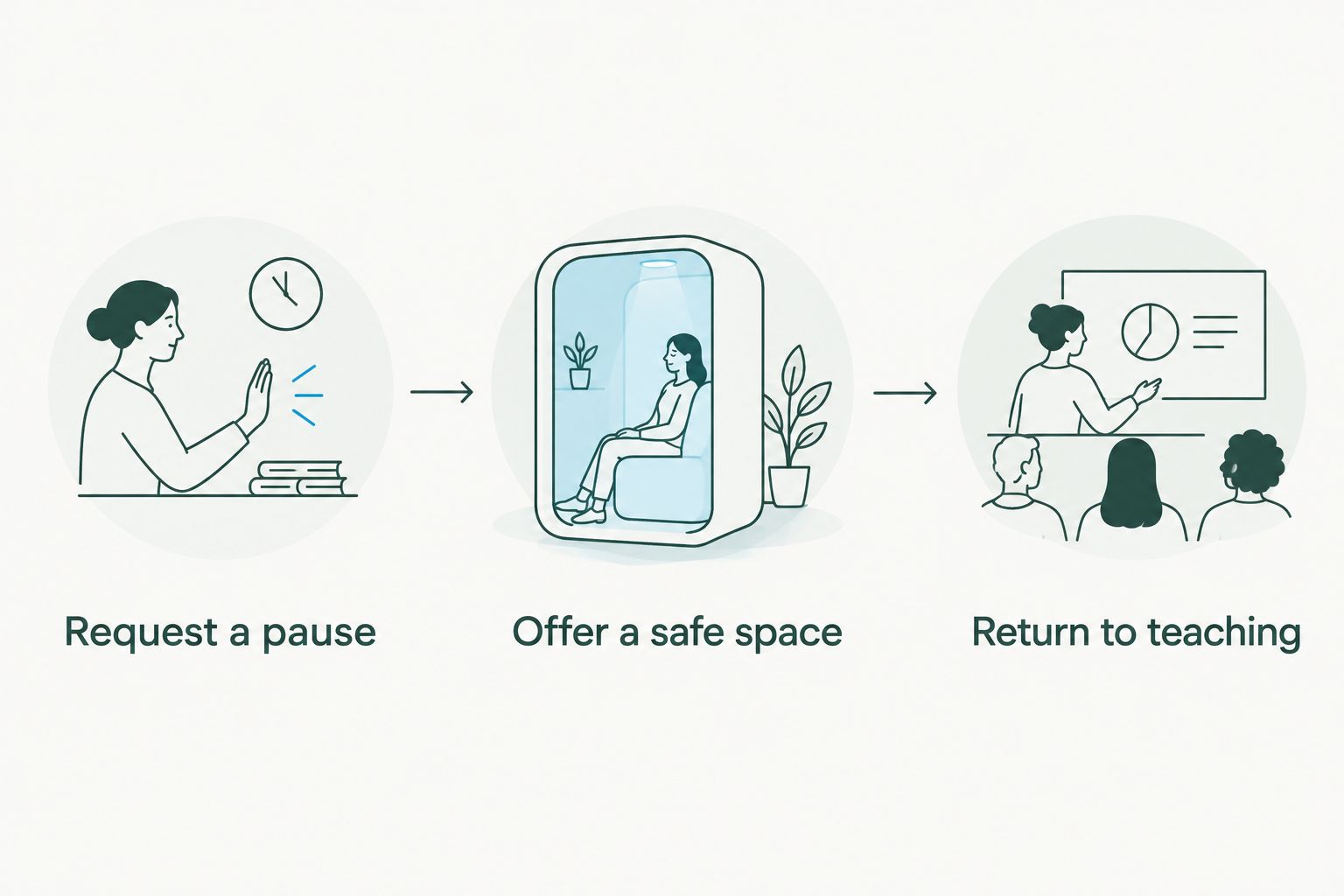
Agree on a supported pause while everyone is settled. Your child might prefer a quieter place, less conversation, or an adult sitting nearby. Do not assume that every child wants touch or that the same calming activity works every time.
A 5-minute check-in can be an example starting arrangement, not a deadline for becoming calm. Check whether your child needs more support before expecting a return to the task.
- Agree on how your child can request a pause.
- Offer a safe space without locking your child away.
- Reduce unnecessary noise or demands when practical.
- Keep other children away from immediate danger.
- Return to teaching after distress has eased.
6. Coordinate expectations with other adults
Your child should not have to discover a completely different rule every time the caregiver changes. Share the behavior you are teaching, the cue you use, and the response that follows.
Consistency means a shared approach, not identical treatment in every setting. School and home have different demands. An older child also needs a voice in choosing reminders and goals that do not embarrass them.
For your 2026 school conversations, bring a concrete example rather than asking adults to fix everything at once. Ask what support is already in place and whether a formal evaluation or accommodations discussion is appropriate.
- Share a brief description of the target behavior.
- Agree on a short, recognizable reminder.
- Explain what useful progress looks like.
- Ask your child which cues feel respectful.
- Discuss recurring concerns with the relevant school professional.
7. Review the plan and protect your own capacity
A discipline plan that requires endless tracking and perfect patience will be difficult to sustain. Keep the first version small enough to use on an ordinary, tiring day.
Review whether the instruction was clear, the task was manageable, and the feedback arrived when it mattered. If the plan is not helping, change the support before deciding your child needs a harsher consequence.
Your response matters, too. When you yell, acknowledge it without asking your child to comfort you. Restate the limit calmly and decide what adult support would make the next attempt more manageable.
- Track starts, attempts, and recovery—not only failures.
- Change one part of the plan at a time.
- Share responsibilities with another safe adult when possible.
- Ask for help before exhaustion becomes your normal state.
- Seek professional support for persistent or unsafe difficulties.
Compare support options for your family
Choose support by the problem it addresses. This 2026 comparison separates everyday planning from structured care; none of these options makes another automatically unnecessary.
| Option | Best for | What it offers | Key limitation |
|---|---|---|---|
| Homemade routine checklist | Practicing a predictable daily task | A visible sequence you can adjust with your child | Does not assess why a difficulty persists |
| Pdfcanopy downloadable discipline guide | Parents who prefer self-paced reading about teaching without fear | Written parenting advice in PDF form | Not established here as ADHD-specific or individualized care |
| Parent training in behavior management | Parents seeking structured instruction in behavior strategies | Guided learning about reinforcement, structure, and consistent responses | Requires participation and practice outside sessions |
| School support planning | Difficulties linked to classroom tasks or school routines | A discussion of educational needs and appropriate supports | Does not replace a home plan or medical assessment |
| Clinical assessment or treatment review | Persistent impairment, safety concerns, or questions about treatment | Individual evaluation and recommendations | Does not remove the need for everyday routines and practice |
Choose the least complicated tool that addresses the actual need. A forgotten backpack might call for a visible packing routine. Repeated aggression or serious difficulty functioning calls for professional assessment, not a more elaborate sticker chart.
Ask any prospective professional what the service includes and how progress will be reviewed. Keep ADHD treatment decisions with a qualified clinician who knows your child's history.
Common mistakes parents of ADHD kids make
Treating every missed instruction as defiance
A missed direction does not establish intent. Check whether your child heard it, understood it, and could identify the first step before deciding how to respond. Accountability works better when the expectation is clear.
Making rewards too distant or goals too broad
A goal such as behaving well all week leaves too much undefined. Choose an observable action, such as placing homework in the folder, and acknowledge it when it happens. Keep earned acknowledgments separate from later mistakes.
Explaining the lesson during peak distress
A long explanation adds demands when your child is already struggling. Protect safety, use fewer words, and revisit the event later. Returning to the conversation matters; postponing teaching is not abandoning the limit.
Removing movement to address every problem
Do not make every consequence the loss of an opportunity to move. Ask whether the consequence teaches the missing skill or simply removes something your child enjoys. Match the response to the behavior instead of using one penalty for everything.
Expecting yourself to carry the whole plan alone
Exhaustion makes consistency harder. Simplify the routine and ask another adult for a specific contribution, such as handling the evening checklist. Your child's support plan needs to be workable for the adults using it.
FAQ
What's the best positive discipline approach for ADHD kids?
Start with clear instructions, immediate positive feedback, predictable limits, and practice of replacement skills. Choose a specific routine rather than trying to change every behavior at once, and ask a clinician about parent training in behavior management.
Does positive discipline mean my child gets no consequences?
No—positive discipline includes limits and consequences connected to the behavior. Stop unsafe actions, keep explanations brief, and teach a safer alternative after your child is calm.
What should I do when my child with ADHD ignores instructions?
Check understanding and give a single, concrete action before assuming deliberate refusal. Use a visible cue or help your child begin, then notice the attempt.
Are reward charts helpful for children with ADHD?
A reward chart can make a specific goal and its acknowledgment visible. Keep the target achievable and feedback timely; a chart is not a substitute for assessment when problems persist.
What should I do during an ADHD meltdown?
Prioritize safety, reduce verbal demands, and offer calm support that your child tolerates. Discuss the event and practice a replacement response after distress has eased; seek urgent help if anyone is in immediate danger.
Can a parenting PDF replace ADHD treatment?
No—a parenting PDF provides general education, not diagnosis or individualized treatment. Discuss persistent difficulties and treatment questions with a qualified clinician.
When should I ask for professional help with discipline?
Ask for professional help when behavior threatens safety or repeatedly disrupts school, home life, or relationships. A clinician can assess contributing difficulties and recommend support suited to your child.
One last thing
For the rest of 2026, keep a smaller definition of success: your child used the reminder, accepted help, or recovered and tried again. Those actions deserve attention even when the whole routine is not yet smooth.
Practice the difficult routine when nobody is in trouble. Rehearsing how to put down a toy or ask for a break gives you something concrete to prompt later. A calmer practice session also lets your child tell you which part feels hard.