
Best overall: a shared-care plan. Best for an overwhelming moment: gentle grounding. Best no-equipment option: a predictable daily routine. These stress tips for grandparents raising grandchildren focus on making your 2026 caregiving load more manageable, not adding another list of things you should be doing.
- Pdfcanopy’s stress tips for grandparents raising grandchildren put shared care before adding more self-care tasks.
- Choose gentle grounding for an overwhelming moment; choose practical help for an overloaded schedule.
- Use predictable routines and clear boundaries without expecting children to manage adult worries.
- Seek professional support when stress disrupts daily functioning or anyone’s safety is at risk.
Why this matters
You can love your grandchildren and still feel exhausted, angry, worried, or stretched beyond your limits. Raising children while managing your own health, family relationships, and household responsibilities leaves little room for advice that amounts to trying harder.
Start by matching the response to the problem. Grounding addresses an overwhelming moment; it does not arrange transportation, resolve custody questions, or give you uninterrupted rest. For help planning an actual break in 2026, explore these respite care resources for family caregivers.
You do not have to solve every pressure at once. Choose the approach below that addresses the part of your day you most need to change.
What makes the best stress tips for grandparents raising grandchildren?
Useful advice must fit a household where children still need meals, supervision, reassurance, and school support. These are the criteria behind the recommendations:
- Practical relief: Does the approach change a task or responsibility, rather than only your attitude toward it?
- Low preparation: Can you begin without equipment, a complicated system, or extensive reading?
- Child safety: Does the approach preserve appropriate supervision and keep adult responsibilities with adults?
- Personal fit: Can you adapt it to your mobility, health, household, and grandchildren’s needs?
- Clear limits: Is it obvious when the approach is insufficient and outside help is needed?
Pdfcanopy’s stress tips favor manageable actions over demanding routines. A strategy that requires more energy than you have is not the right starting point.
The best approaches at a glance for 2026
| Approach | Best for | Standout feature | Key limitation |
|---|---|---|---|
| Shared-care plan | Too many responsibilities | Assigns specific tasks to another capable adult | Requires someone able and willing to help |
| Gentle grounding | An overwhelming moment | Directs attention to your immediate surroundings | Does not remove the source of stress |
| Predictable daily routine | Repeated household friction | Gives recurring tasks a consistent order | Needs flexibility for changing needs |
| Clear family boundaries | Adult conflict spilling into caregiving | Defines what you will handle and discuss | Other adults do not have to agree |
| Peer support | Feeling alone in the caregiving role | Creates space to talk with other caregivers | Group quality and fit vary |
| Protected health time | Your own care getting postponed | Puts health needs on the household calendar | Requires coverage when children need supervision |
1. Shared-care plan: best stress tip for an overloaded schedule
A shared-care plan names a task, the person responsible, and the arrangement for completing it. It turns a general request for help into something another adult can accept or decline clearly.
Start with the responsibility you most need to hand over. That might be a school pickup, a grocery trip, or supervising the children while you attend an appointment. Ask someone who is safe, reliable, and appropriate for that responsibility.
For example, propose a 30-minute break while a trusted adult supervises your grandchildren. This is a planning suggestion, not a minimum requirement or a promise that a short break will resolve burnout.
Shared-care plan pros:
- Makes the requested help specific.
- Separates asking for support from explaining your entire family situation.
- Gives you a clear arrangement to confirm.
Shared-care plan cons:
- Depends on a suitable person being able to help.
- Informal arrangements need a backup when plans change.
Best for: Grandparents whose stress comes from having more responsibilities than they can reasonably carry alone.
If relatives cannot help, ask a school social worker or local family-support organization where to inquire about kinship caregiver support. Confirm eligibility and supervision arrangements directly.
Verdict: Buy into shared care first when workload is the problem.
2. Gentle grounding: best stress tip for an overwhelming moment
Gentle grounding means noticing your surroundings and physical support before deciding what to do next. You can look around the room, feel the chair beneath you, and name something you see.
Try a 1-minute pause as an optional practice: place your feet comfortably, notice your surroundings, and let your breathing stay easy. Do not force deep breaths or hold your breath. Stop any exercise that makes you dizzy or uncomfortable.
If your grandchildren need immediate attention, keep them safely supervised. Taking a pause does not mean leaving a young child alone or stepping away from a dangerous situation.
Gentle grounding pros:
- Requires no equipment.
- Fits into a brief pause between tasks.
- Gives you a concrete action before responding to conflict.
Gentle grounding cons:
- Does not resolve practical or relationship problems.
- Focusing on physical sensations feels uncomfortable for some people.
Best for: A tense moment when everyone is safe and you need space before responding.
You do not need to feel completely calm before taking the next sensible step. If grounding feels unhelpful, try looking at a familiar object or listening to ordinary sounds instead.
Verdict: Buy into grounding for the moment, not as a replacement for support.
3. Predictable daily routine: best stress tip for recurring friction
A predictable routine gives recurring tasks a familiar order. It does not require a tightly timed schedule or a household that runs without interruptions.
Choose one difficult transition, such as leaving for school or preparing for bed. Write the necessary tasks in plain language, then decide which tasks your grandchild can handle with appropriate support. Keep adult responsibilities with adults.
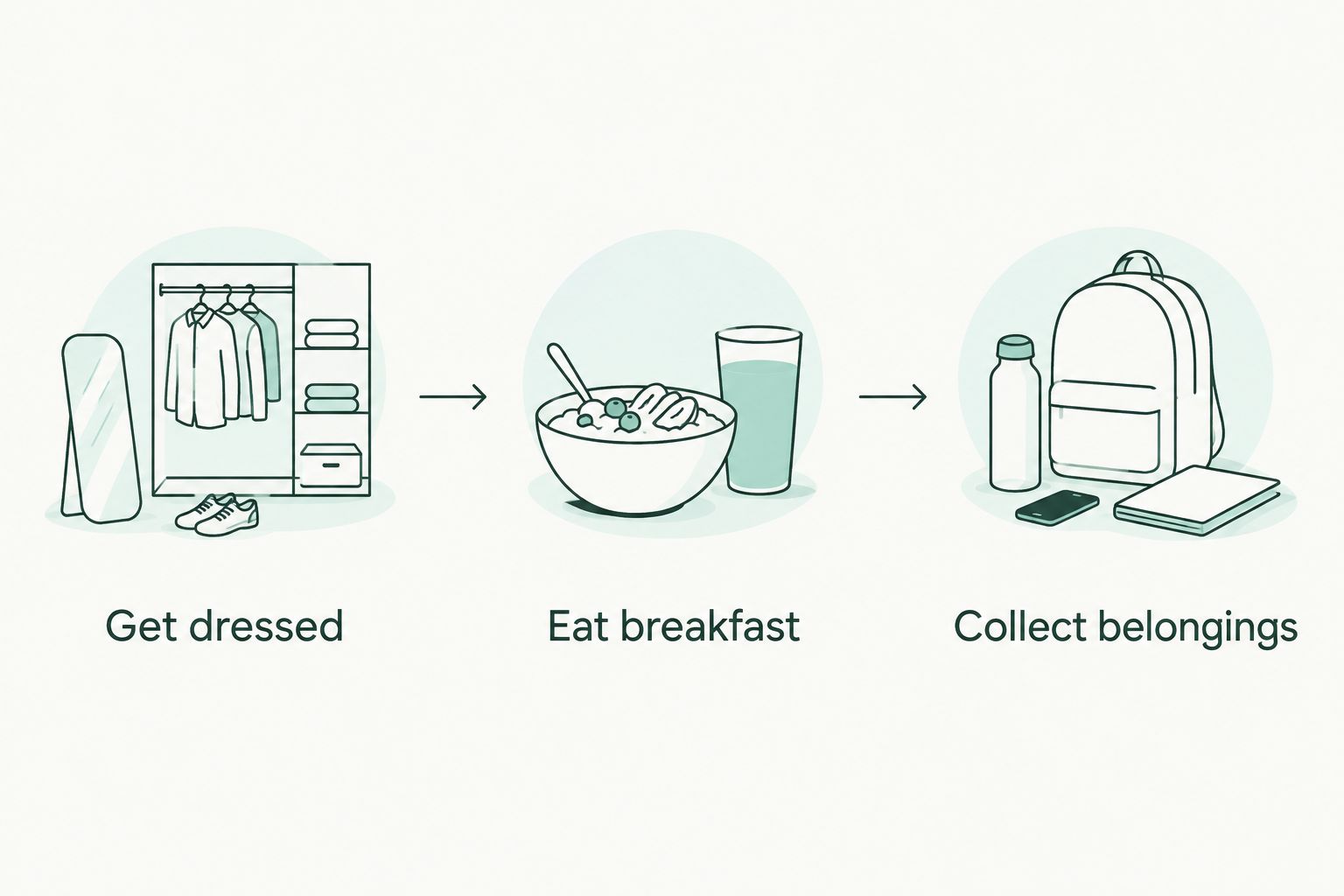
For a morning routine, use 3 steps as a starting outline: get dressed, eat breakfast, collect school belongings. Adapt the order and level of help to your grandchild rather than treating the outline as a rule.
Predictable daily routine pros:
- Makes the next task visible.
- Gives adults a shared reference for recurring responsibilities.
- Can be adjusted without abandoning the whole approach.
Predictable daily routine cons:
- An overly detailed schedule adds work.
- Illness, disability, appointments, and disrupted sleep require flexibility.
Best for: Households where the same transition repeatedly becomes confusing or contentious.
Let your grandchild help choose a useful reminder. Avoid turning the checklist into another argument about doing everything perfectly.
Verdict: Buy into a simple routine; skip a rigid household timetable.
4. Clear family boundaries: best stress tip for adult conflict
A family boundary describes what you will do, accept, or discuss. It is different from trying to control another adult’s choices.
Choose a boundary tied to a specific pressure. You might reserve adult disagreements for conversations away from the children, or decline to change an established plan without adequate notice. Explain the boundary briefly and identify the next practical step.
Do not ask grandchildren to carry messages, settle disputes, or reassure adults about adult problems. For everyday child behavior, Pdfcanopy’s How To Discipline Your Child Without Fear is a separate reading option—not a substitute for resolving conflict between adults.
Clear family boundaries pros:
- Defines your responsibilities more clearly.
- Keeps the focus on actions you control.
- Establishes topics that should stay outside children’s conversations.
Clear family boundaries cons:
- Other adults can resist or ignore a boundary.
- Safety concerns and legal arrangements need more than a household agreement.
Best for: Grandparents whose caregiving stress includes repeated pressure or conflict from other adults.
Follow applicable court orders and get qualified local advice about legal questions. If threats, intimidation, or violence are involved, prioritize safety rather than attempting a difficult boundary conversation alone.
Verdict: Buy into clear limits; skip arguments that ask children to take sides.
5. Peer support: best stress tip for feeling alone
Peer support gives you a place to talk with people who understand caregiving responsibilities. A kinship caregiver group is a specific option to ask about because the discussion centers on relatives raising children.
Ask who facilitates the group, how privacy is handled, and whether discussion includes grandparents’ concerns. For an online group, read its rules before sharing personal information. You can listen before deciding how much to say.
Peer support pros:
- Offers a place to discuss your own experience.
- Lets you hear how other caregivers approach everyday problems.
- Does not require you to present yourself as coping perfectly.
Peer support cons:
- Advice from another household does not automatically fit yours.
- Peer discussion is not confidential professional care unless explicitly provided as such.
Best for: Grandparents who need understanding and conversation beyond immediate family.
Protect your grandchild’s privacy. Avoid sharing identifying school, medical, or custody information in public discussions. Leave a group that pressures you, shames children, or treats personal anecdotes as medical or legal instructions.
Verdict: Buy into supportive conversation; skip groups that replace listening with judgment.
6. Protected health time: best stress tip when your needs keep slipping
Protected health time means making your own appointments, medication routines, meals, and rest part of the household plan. It is not a reward you earn after finishing everyone else’s care.
Choose one postponed need and make the next action specific. That could mean arranging appointment coverage, placing a reminder where you will see it, or asking your clinician about persistent sleep difficulties. Keep treatment decisions with your healthcare professional.
Protected health time pros:
- Makes neglected needs visible.
- Connects an appointment or break with the coverage it requires.
- Gives helpers a concrete way to support you.
Protected health time cons:
- Scheduling alone does not create childcare coverage.
- A household routine cannot assess or treat a health condition.
Best for: Grandparents repeatedly canceling, delaying, or overlooking their own care.
If stress is disrupting sleep, concentration, relationships, or daily functioning, discuss it with a qualified healthcare professional. Tell them about your caregiving responsibilities and what has changed, rather than waiting until you can describe everything neatly.
Verdict: Buy into protecting your health; skip treating persistent symptoms as something to push through.
How these approaches are ranked
This 2026 ranking prioritizes practical relief, low preparation, child safety, personal fit, and clear limits. It is a decision guide, not a claim that these approaches were clinically compared or that one method works for every family.
Shared care ranks first because it directly addresses assigned responsibilities. Grounding comes next for immediate tension; the remaining approaches address recurring friction, adult conflict, isolation, and postponed health needs.
Which stress tip should you choose?
Choose a shared-care plan if you are unsure where to start. Identify the task you most need help with, name an appropriate person to ask, and make a specific request.
For your 2026 household plan, add another approach only when it addresses a separate problem. A morning checklist is useful for a confusing morning; it is not the answer to a custody dispute or a medical concern.
Pdfcanopy’s stress tips for grandparents raising grandchildren are best for caregivers who want practical starting points, not a diagnosis or a substitute for professional care.
FAQ
What’s the best stress tip for grandparents raising grandchildren?
Start with a shared-care plan when too many responsibilities are the main problem. Ask a safe, reliable adult to take a specific task rather than making an open-ended request for help.
What can I do when I feel overwhelmed right now?
If everyone is safe, try gently noticing your surroundings before responding. Keep children appropriately supervised, and stop any breathing or grounding exercise that feels uncomfortable.
How do I ask family for help without starting an argument?
Make a specific request that the other person can clearly accept or decline. State the task and arrangement without asking your grandchild to carry the message or settle disagreements.
Is it normal to love my grandchildren and still need a break?
Loving your grandchildren does not remove your need for rest or support. Needing a break is not a measure of how much you care about them.
What if I have nobody who can watch my grandchildren?
Ask a school social worker or local family-support organization where to inquire about kinship caregiver and respite support. Confirm eligibility, caregiver suitability, and supervision arrangements before relying on an option.
When should I get professional help for caregiving stress?
Seek professional help when stress disrupts your daily functioning or raises safety concerns. If anyone is in immediate danger, contact emergency services; in the United States, call or text 988 for suicide or mental health crisis support.
One last thing
The next helpful step does not have to be something you do yourself. Before adding another coping exercise to your 2026 routine, ask which responsibility can be shared, simplified, or postponed safely.
You need a workable caregiving arrangement, not proof that you can endure everything alone.