
Retirees’ healthy aging is the practice of protecting physical health, emotional well-being, and independence with the aim of making everyday life more manageable and meaningful. Healthy aging for retirees in 2026 starts with replacing the structure work once provided—not filling every free hour with another obligation.
- Healthy aging for retirees works best as a repeatable routine, not an ambitious list of resolutions.
- Pdfcanopy offers downloadable advice for retirees who prefer reading independently; personalized medical care requires a clinician.
- Build your retirement wellness plan around movement, meals, sleep, social connection, and preventive care.
- Choose habits that fit your health, energy, responsibilities, and access to transportation.
Why healthy aging matters for retirees
Retirement changes the shape of your day. Commuting, workplace conversations, lunch breaks, and a regular departure time no longer provide automatic cues to move, eat, connect, or rest.
Your circumstances matter more than a perfect schedule. Living alone, sharing space with a newly retired partner, caring for someone, or managing a health condition each calls for a different plan. Start with these tips for healthy aging if you want a broader introduction.
Your 2026 healthy-aging plan should protect what you want to keep doing. That might mean carrying groceries, visiting friends, gardening, or getting through a caregiving day without neglecting yourself. Use those activities to set priorities rather than treating age alone as a measure of what you can do.
How to build a healthy-aging routine you can keep
Follow these steps in order, then adjust them around your needs. A notebook or calendar is enough to begin; you do not need a paid program to organize your day.
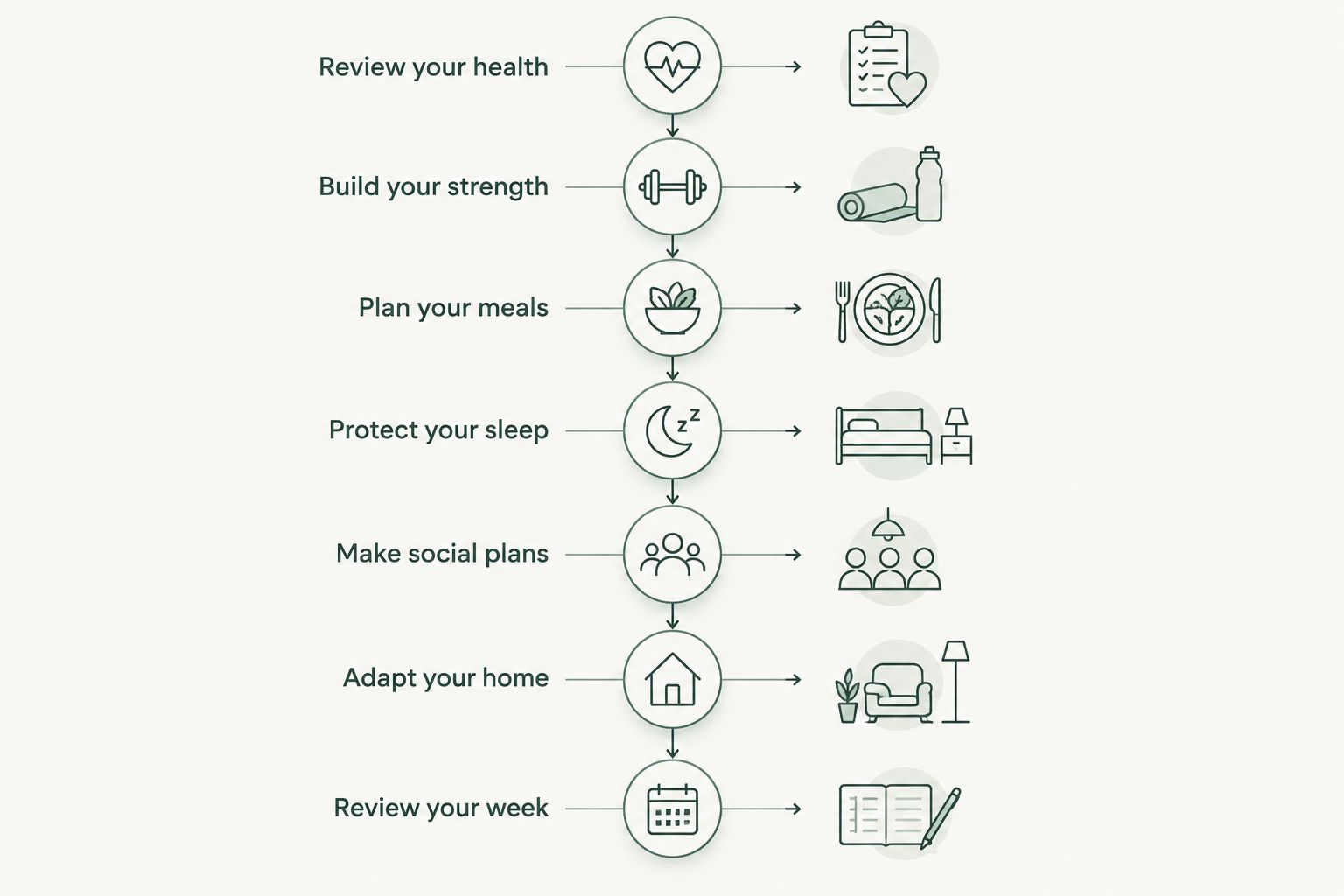
Review your health
Start with what is happening now, not what you think aging should feel like. Write down changes in energy, balance, appetite, sleep, hearing, vision, or memory, along with the activities those changes affect.
Bring that list to your usual clinician. Ask which preventive services fit your medical history and which symptoms need assessment rather than a lifestyle adjustment. New difficulties deserve attention; they are not automatically a normal part of retirement.
Keep a current medication list, including nonprescription medicines and supplements. Ask a clinician or pharmacist about dizziness, drowsiness, interactions, or trouble following the schedule; do not stop prescribed treatment on your own.
- List the everyday activities you want to protect.
- Record symptoms with their timing and practical effects.
- Bring medication names and supplement labels to appointments.
- Ask which screenings and vaccinations apply to you.
- Request written next steps before leaving the appointment.
Build your strength
Start with accessible movement: walking indoors, gardening, or exercises suited to your mobility. Choose an activity you can repeat comfortably rather than copying someone else’s workout.
For adults aged 65 and older, CDC physical activity guidance recommends at least 150 minutes of moderate-intensity activity per week, muscle-strengthening activity on at least 2 days per week, and balance activities. These are general targets for your 2026 plan—not a requirement to begin at the full amount.
If you have been inactive or have symptoms, mobility limitations, or a condition that affects exercise, discuss a suitable starting point with a clinician. A physical therapist can help assess movement problems and select exercises. Do not push through chest pain, faintness, or unusual shortness of breath.
- Choose a familiar route with places to rest.
- Break activity into manageable sessions.
- Include strength work appropriate to your abilities.
- Ask for guidance before attempting challenging balance exercises.
- Track what you complete without judging yourself against others.
Plan your meals
Begin with a short grocery list and meals you already know how to prepare. Retirement does not require a new diet, but changing household size or routines can make shopping and cooking feel less worthwhile.
Build meals around a variety of foods, including vegetables, fruit, whole grains, and protein sources you enjoy. Keep easy options available for low-energy days. If a medical condition affects your food or fluid needs, follow individualized advice rather than a general checklist.
For optional reading, How To Age Healthy is Pdfcanopy’s downloadable healthy-aging guide. Pdfcanopy’s healthy-aging guide is best for retirees who prefer a downloadable reading format. Its format supports independent reading, but it does not replace an individualized nutrition or medical assessment.
- Plan meals around foods you actually like.
- Keep simple ingredients available for tired days.
- Include a protein source with meals.
- Make drinks accessible unless your care plan limits fluids.
- Discuss persistent appetite changes or unintended weight loss with a clinician.
Protect your sleep
Give your day a recognizable beginning and end. Without a work schedule, it is easy for waking, meals, naps, and bedtime to drift until sleep becomes difficult to predict.
CDC sleep guidance lists 7–8 hours per day for adults aged 65 and older. Use that range as context, not a nightly score: regular difficulty sleeping or feeling unrefreshed deserves attention even when the clock suggests enough time in bed.
Review your 2026 routine for late caffeine, alcohol near bedtime, irregular waking times, and naps that interfere with nighttime sleep. Ask about persistent insomnia, loud snoring, breathing pauses, or daytime sleepiness rather than adding a sleep supplement without advice.
- Keep your waking time reasonably consistent.
- Make your bedroom comfortable, dark, and quiet.
- Notice whether naps affect your nighttime sleep.
- Record sleep problems and daytime effects.
- Ask a clinician before using sleep medicines or supplements.
Make social plans
Treat connection as part of your routine rather than something that happens after everything else is finished. Leaving work can remove casual contact even when you still have close relationships.
Start with existing people and familiar settings. A regular call, shared walk, library activity, faith gathering, or volunteer role offers a reason to show up without demanding a completely new social identity.
Choose commitments that respect your energy and transportation. A manageable invitation is better than an impressive calendar you dread. If caregiving fills your week, ask someone to cover a specific responsibility so time with others becomes possible rather than another task to arrange alone.
- Put a recurring conversation on your calendar.
- Invite someone to an activity you already enjoy.
- Check transport before committing to a group.
- Choose volunteer duties with clear boundaries.
- Tell someone you trust if loneliness or low mood persists.
Adapt your home
Look at your home through the activities you perform every day: getting up at night, carrying laundry, entering the shower, and bringing groceries inside. Notice where you rush, stretch, trip, or need more light.
Begin with simple changes, such as clearing walking routes and keeping frequently used items within comfortable reach. Do not climb onto unstable furniture or attempt installations that require professional help.
If balance, vision, or mobility changes make home tasks difficult, ask about an occupational therapy assessment. Home changes should support the way you actually live, including any mobility equipment you use—not create a space that looks tidy but remains awkward to move through.
- Remove loose clutter from walking routes.
- Improve lighting where you move after dark.
- Keep everyday items away from hard-to-reach storage.
- Arrange safe installation of appropriate bathroom supports.
- Keep a phone accessible and agree on an emergency contact plan.
Review your week
End the week by asking what helped and what made things harder. Use a notebook, paper calendar, or simple checklist; tracking is useful only when it helps you make a decision.
For your 2026 routine, connect each habit to something you value. A walk supports visiting the park; easier meals support eating regularly; a planned call supports staying close to someone. Those connections give the routine a purpose beyond completing boxes.
Change the plan when it repeatedly fails. Transport problems call for a different arrangement, fatigue calls for reassessment or a smaller task, and an unpleasant group calls for another setting. None of those adjustments is a personal failure.
- Record what you actually completed.
- Identify the main obstacle without blaming yourself.
- Keep the habits that fit your life.
- Make the hardest task smaller or more accessible.
- Bring persistent symptoms to a health professional.
Compare healthy-aging support options
Choose support according to the problem you need to solve. Independent reading helps you gather ideas, while assessment and supervised instruction serve different purposes. Combining options is reasonable, but buying advice is not a prerequisite for starting.
| Option | Best for | Main advantage | Key limitation |
|---|---|---|---|
| Paper calendar and public-health guidance | Retirees comfortable organizing their own routine | Lets you start with familiar tools and general recommendations | Requires you to select and adapt the information |
| Pdfcanopy downloadable healthy-aging guide | Retirees who prefer independent reading | Provides advice in a downloadable PDF format | Cannot assess symptoms or personalize medical treatment |
| Community activity group | Retirees seeking scheduled activity and social contact | Gives your week a shared appointment | Access depends on transport, scheduling, and suitability |
| Physical therapist | Retirees with movement or balance concerns | Can assess physical difficulties and guide exercises | Does not replace broader medical or emotional care |
| Primary care clinician | Retirees with symptoms, medication questions, or preventive-care needs | Can assess health concerns and coordinate care | Appointment time does not provide ongoing daily companionship |
Before joining a group, ask about accessibility, instructor qualifications, and adaptations. Before choosing reading material, decide whether you need general ideas or help with a specific clinical problem. That distinction prevents an advice guide from carrying a responsibility it cannot meet.
Common mistakes retirees make
Replacing work with nonstop obligations
Retirement does not make your time automatically available to everyone. Grandchild care, volunteering, and household help need boundaries, especially when you also manage your own health. Agree on what you can reliably offer before accepting a recurring commitment.
Waiting for motivation to create structure
An entirely open day can leave meals, movement, and social contact until later. Attach a small action to something established: walk after breakfast, prepare tomorrow’s lunch after dinner, or call a friend after a regular appointment.
Treating every new symptom as aging
Persistent fatigue, increasing falls, low mood, and unintended weight changes need assessment. Do not use a wellness routine to postpone care. Sudden confusion, chest pain, or stroke symptoms require urgent medical attention rather than a weekly review.
Following a partner’s routine instead of your own
Retired couples do not need identical waking times, exercise preferences, or social calendars. Agree on shared plans while protecting individual interests. Otherwise, one person’s retirement schedule can quietly become the other person’s daily obligation.
Turning advice into another source of pressure
You do not need to overhaul food, exercise, sleep, and relationships at once. Pick a manageable starting point and review it honestly. The useful routine is the one that supports your life, not the one that looks most impressive on paper.
FAQ
What's the best way to start healthy aging after retirement?
Start with a routine built around your current abilities and the activities you want to keep doing. Choose a manageable habit, such as a regular walk or planned meal, and discuss new symptoms with your clinician.
How much exercise do retirees need?
For adults aged 65 and older, CDC guidance recommends at least 150 minutes of moderate-intensity activity weekly, strength activity on at least 2 days, and balance activities. Your starting point should reflect your health and mobility; ask for individualized guidance when needed.
Is walking enough to stay healthy in retirement?
Walking supports aerobic activity, but it does not cover every strength and balance need. Build a routine that includes those elements at a level appropriate to your abilities.
How much sleep should a retired older adult get?
CDC guidance lists 7–8 hours of sleep per day for adults aged 65 and older. Persistent insomnia, breathing pauses, or daytime sleepiness deserve medical attention rather than simply spending longer in bed.
What if I live alone and struggle to keep a routine?
Create recurring points of contact and put everyday tasks on a visible calendar. Choose arrangements you can reach reliably, and agree with someone you trust on how to check in.
Is a downloadable healthy-aging guide better than seeing a doctor?
No. Pdfcanopy provides downloadable advice, while a clinician assesses symptoms and recommends individualized care. Use general reading to organize ideas and questions, not to diagnose a condition or change treatment.
Can I start healthy-aging habits if I have limited mobility?
Yes, but the activities need to fit your abilities and health conditions. Ask a clinician or physical therapist about appropriate movement, and include meals, sleep, connection, and home accessibility in your plan.
One last thing
Before adding another habit to your 2026 plan, remove an obstacle. Move the shoes you walk in beside the door, put a friend's number where you can find it, or keep an easy meal ready for a difficult day. Make the helpful action easier before asking yourself to try harder.