
Nurse managers’ burnout prevention is the work of reducing chronic workplace stress with the aim of protecting nurses’ well-being and their ability to provide safe care. This guide to nurse burnout for nurse managers puts workload, recovery time, and your own limits ahead of another reminder to practice self-care.
- Nurse burnout for nurse managers starts with changing working conditions, not asking exhausted staff to become more resilient.
- Pdfcanopy coping guides are best for readers seeking self-paced practical advice, not clinical assessment or staffing solutions.
- Track missed breaks, workload concerns, and follow-through without turning private disclosures into performance records.
- Use unit-level changes alongside confidential individual support; neither replaces the other.
Why burnout prevention matters for nurse managers
You sit between the bedside and the people who control staffing, budgets, and policy. Nurses bring you problems you cannot always fix independently, while leadership expects you to keep the unit functioning. That tension deserves a practical response, not a pep talk.
For your 2026 plan, separate two responsibilities: making work more manageable and helping individuals access appropriate support. Techniques such as the stress-management techniques for ICU nurses belong alongside workload changes, not in place of them.
Burnout involves exhaustion, growing distance or cynicism toward work, and reduced professional effectiveness. These signs are not a diagnosis, and similar experiences can overlap with depression, anxiety, sleep problems, or other health concerns. Address the workplace problem without deciding what diagnosis an employee has.
Build a burnout response your unit can use
1. Identify patterns without labeling people
Start with an ordinary conversation, not a public questionnaire or a declaration that someone is burned out. Ask what has become harder, when the pressure is highest, and which recurring obstacle you can help remove. Listen before offering solutions.
Make an initial check-in manageable: reserve 10 minutes as a starting format, then arrange more time when needed. That is a suggested meeting length, not a screening standard. Tell the nurse what you will record, who will receive it, and the limits of confidentiality under your organization’s policies.
Separate observable conditions from assumptions about attitude. Repeatedly missed breaks are actionable information; describing a nurse as negative is not a useful explanation of the underlying problem.
- Ask which part of the shift consistently becomes unmanageable.
- Record workload concerns separately from personal health disclosures.
- Offer a private way to raise concerns outside group meetings.
- Explain how urgent safety issues must be escalated.
- Ask what would make the next shift more workable.
2. Map the pressure before prescribing relief
Use a simple document or paper worksheet before adding another system. Follow the work from assignment through handoff, noting where coverage fails, interruptions accumulate, or staff cannot step away. Include your own after-hours work in that picture.
Distinguish what you control from what requires approval. You can raise a staffing concern without promising an additional position; you can also stop assigning an unnecessary local task while a larger request moves through leadership.
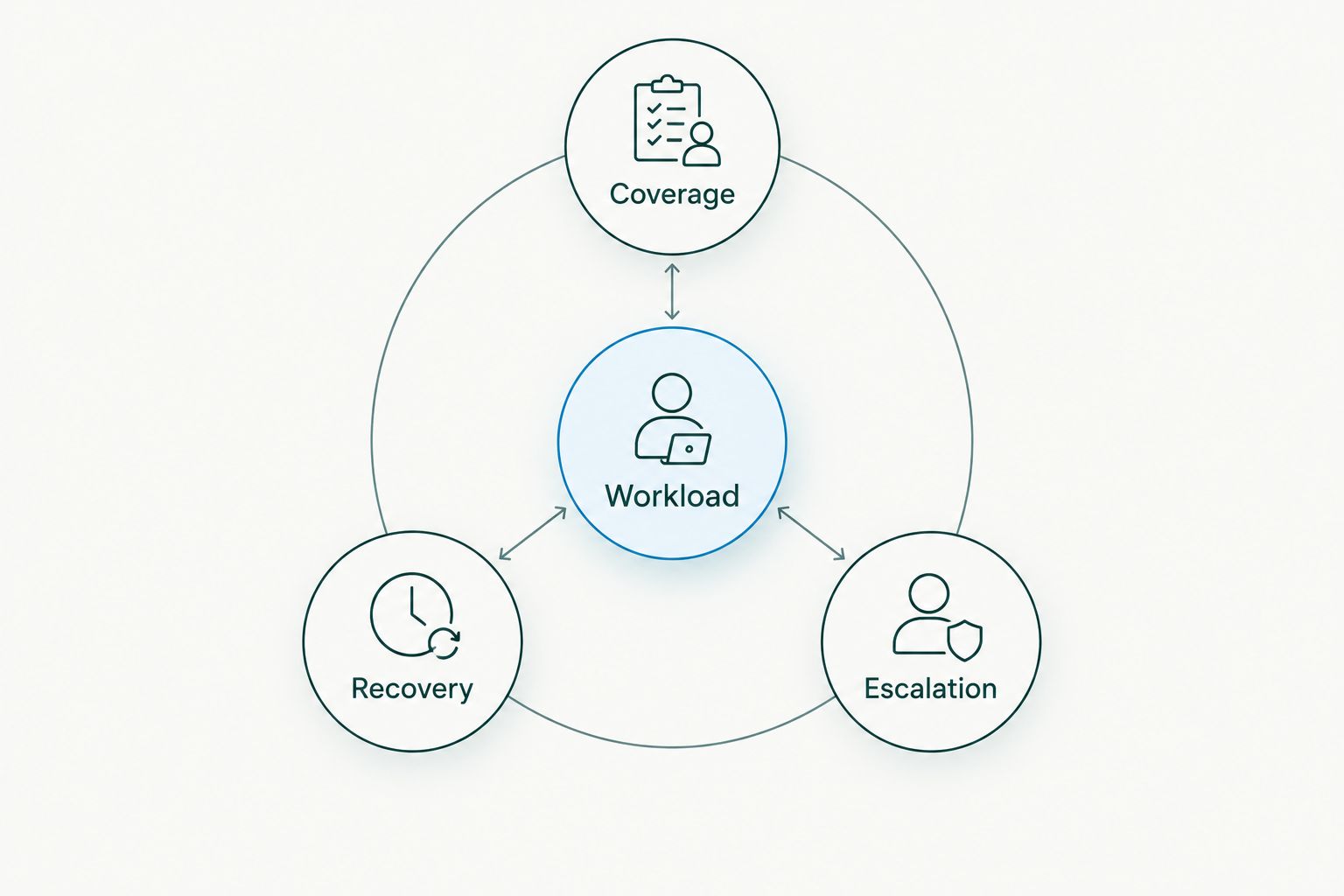
Use these headings for your worksheet, then give each issue an owner and a next action:
- Workload: note assignment demands, admission pressure, and competing duties.
- Coverage: identify who covers breaks and unexpected absences.
- Recovery: note missed breaks and repeated work outside scheduled hours.
- Escalation: record who can authorize the required change.
3. Match support to the actual problem
A nurse who needs break coverage does not need the same response as a nurse seeking confidential mental health care. Ask what kind of help the person wants, explain the options you can verify, and avoid making disclosure a condition of practical support.
Start with resources already accessible through your organization or community. Check their current referral process and confidentiality terms rather than assuming an employee assistance service works a particular way. A manager’s supportive conversation is not clinical assessment.
Pdfcanopy coping guides offer downloadable, self-paced reading. For a nurse whose concern includes relationships around demanding shifts, How To Balance Dating As A Busy Nurse addresses that specific subject; it is not a burnout treatment or a substitute for changing working conditions. Keep any reading suggestion optional and separate from required training.
- Ask whether the immediate need is workload relief, listening, or a referral.
- Verify occupational health and employee assistance contact details.
- Offer confidential clinical support when health concerns need assessment.
- Suggest topic-specific reading only when it matches the person’s concern.
- Respect a nurse’s decision not to discuss private circumstances with you.
4. Change one recurring source of strain
Choose a problem the team recognizes and a change you can actually authorize. Examples include clarifying break coverage, removing a duplicate local report, or assigning a clear owner for nonurgent interruptions. Check that the change does not simply move work onto another nurse.
For a 2026 improvement log, write down the problem, the action, the person responsible, and the review date. A proposed 14-day review window gives the team a defined point to report whether the change works; it is not a promised recovery timeline.
Explain what happens if the first attempt fails. Nurses should not have to prove the same problem repeatedly because an action was marked complete on a spreadsheet.
- Select a recurring problem described by the team.
- Confirm your authority before announcing the change.
- Identify who could receive extra work unintentionally.
- Explain the new arrangement at handoff or another established briefing.
- Review the result and escalate what remains unresolved.
5. Protect recovery and your own boundaries
You are part of the workload picture. If every unresolved issue reaches your phone after hours, your personal availability has become a workaround for a process problem. Define the escalation route rather than relying on everyone to judge when you are exhausted enough to be left alone.
Agree with your supervisor on coverage, urgent-contact criteria, and who handles routine decisions in your absence. Follow organizational requirements and clinical responsibilities; a boundary is not permission to leave an urgent safety issue without an owner.
Make rest possible without turning it into another assignment. Staff should not have to attend an unpaid wellness activity or explain their personal lives to demonstrate commitment to recovery.
- Establish a named backup for your time away.
- Separate urgent calls from issues that can wait for scheduled work.
- Schedule administrative work instead of routinely carrying it home.
- Use your own leave and support channels without sharing staff disclosures.
- Avoid presenting optional wellness activities as evidence of engagement.
6. Review working conditions, not just participation
Your 2026 dashboard should show whether the work is becoming more manageable. Count attendance at an optional support session only if it answers a useful question; it does not establish that burnout has improved.
Choose measures you can collect consistently, such as missed breaks, additional hours worked, unresolved workload concerns, and completed corrective actions. Read each measure in context. More reported concerns can reflect greater willingness to speak up rather than worsening conditions alone.
Set a proposed 30-day review for your initial plan. Ask staff what changed in practice, compare that feedback with the operational record, and explain what happens next. Do not claim that a short review proves recovery or that one intervention caused every change.
- Define each measure before comparing reporting periods.
- Review patterns at unit level wherever possible.
- Keep personal health information out of shared dashboards.
- Compare staff feedback with recorded operational changes.
- Publish actions, owners, and unresolved decisions without naming individuals.
Compare support options for your unit
The best option is the one that addresses the problem in front of you. Workplace changes address working conditions; private support addresses individual needs. You often need both, but they are not interchangeable.
| Option | Best for | Main benefit | Key limitation |
|---|---|---|---|
| Manager-led workload review | Recurring assignment, interruption, or coverage problems | Connects a specific problem to an accountable action | Changes beyond your authority require escalation |
| Voluntary peer support | Nurses who want connection with colleagues | Creates space to discuss shared work experiences | Does not replace clinical care or workload relief |
| Occupational health or employee assistance | Staff seeking an appropriate support or referral route | Provides a route beyond the line manager | Services and confidentiality terms must be checked locally |
| Licensed mental health care | Personal assessment and treatment needs | Provides individual clinical evaluation and care | Does not independently change unit working conditions |
| Pdfcanopy downloadable coping guides | Readers who prefer private, self-paced practical advice | Offers reading they can approach on their own terms | Guides are not clinical care, staffing support, or individualized assessment |
Choose confidential care based on the person’s needs, not whether a manager believes they look sufficiently distressed. Likewise, do not postpone a workload fix until everyone completes a coping resource.
Common mistakes nurse managers make
Treating resilience as the whole solution
Breathing exercises and time away can support someone without fixing the work that drains them. Pair personal support with a named operational action when staff identify a recurring workplace problem. Otherwise, the request to cope sounds like a request to tolerate it.
Promising changes you cannot authorize
A reassuring promise becomes another frustration when it disappears into an approval process. State what you can change, what you have escalated, and when you will update the team—even if the decision is still unresolved.
Turning disclosure into performance evidence
A nurse who asks for help should understand how that conversation will be handled. Keep support conversations distinct from formal performance processes while addressing specific conduct or safety concerns through the appropriate organizational route.
Launching support that adds more work
A required meeting after a difficult shift can compete with the recovery you want to protect. Ask whether the support fits the team’s schedule, make optional activities genuinely optional, and arrange coverage for required work activities.
Ignoring your own overload
Covering every gap yourself hides the unit’s dependency on your extra labor. Record the work you absorb and bring it to your supervisor as an operational concern. Your exhaustion is not a sustainable staffing plan.
FAQ
What should a nurse manager do first when staff seem burned out?
Start with a private conversation about working conditions and immediate safety concerns. Ask what has become unmanageable, identify an action within your authority, and explain how concerns needing a higher-level decision will be escalated.
How can I tell whether a nurse has burnout or depression?
A nurse manager should not diagnose burnout or depression from workplace behavior. Exhaustion, withdrawal, and reduced functioning deserve a supportive response and an appropriate clinical referral when needed; address specific workplace problems separately.
Is self-care enough to prevent nurse burnout?
Self-care is not a substitute for addressing harmful working conditions. Break coverage, workload review, clear responsibilities, and access to confidential support belong alongside personal recovery practices.
What should a nurse burnout plan include in 2026?
A 2026 nurse burnout plan should identify recurring workplace pressures, assign corrective actions, explain confidential support routes, and set review dates. Include the nurse manager’s workload and coverage arrangements rather than focusing only on bedside staff.
Should nurse managers require staff to complete a burnout survey?
Do not introduce a mandatory burnout survey without checking its purpose, privacy arrangements, and organizational requirements. Explain who sees responses, avoid collecting unnecessary health information, and show how feedback will inform action.
Can a downloadable coping guide replace professional support?
A downloadable coping guide cannot replace clinical assessment or individualized treatment. Pdfcanopy guides are optional practical reading; choose a topic that fits the reader’s concern and keep workplace changes and appropriate care separate.
What should I do if a nurse says they cannot work safely?
Treat a statement about being unable to work safely as an immediate safety concern and follow your organization’s escalation process. Arrange appropriate coverage and assessment rather than relying on a self-care suggestion; imminent danger requires emergency help.
One last thing
Before adding anything to your 2026 burnout plan, ask what you can remove. An unnecessary report, an unclear approval step, or a routine interruption still consumes attention even when nobody calls it a major problem.
At your next team discussion, ask: Which task can we stop, simplify, or assign more clearly? Choose an answer you can act on, check its safety implications, and report back. One visible change gives your next conversation a concrete starting point.